Tampilkan postingan dengan label dieting. Tampilkan semua postingan

Senin, 30 Mei 2016

Ad-Libitum Paleo Diet W/ a Handful of Simple Rules Cuts 5-7 kg of Body Fat in 12 Weeks - Plus: Paleo Research Overview

Yes, these foods were "allowed" - Even nuts, albeit in limited amounts.
Ok, I have to admit that I have repeatedly made fun of "paleo" in the past. Its "cultish", sometimes even "sectarian" appeal is and will remain as hilarious in my eyes as the (for some people life-or-death-)question whether certain foods "are paleo" or not (who cares, as long as they are healthy?). If you happen to have seen my presentation at the Paleo Convention in Berlin, last year, you will know that, despite my apathy against the quasi-religious sides of "paleo", I do appreciate a certain set of "rules" or "principles" (or whatever you may call them) all iterations of "paleo" have in common.

These principles work! And they have just been shown to help middle-aged type II diabetics (age 59±8 years) shed a quite impressive 6.7 kg of body fat (w/out exercise "only 5.7kg) in 12 weeks - without dieting as in not eating, although you're hungry (Otten. 2016).
Meat is an essential part of the "paleo diet" | Learn more about meat at the SuppVersity

You May Eat Pork, too!

You Eat What You Feed!

Meat & Prostate Cancer?

Meat - Is cooking the problem

Meat Packaging = Problem?

Grass-Fed Pork? Is it Worth it?
As the headline already tells you, the subjects, individuals diagnosed with type 2 diabetes within the past 10 years, who had a BMI of 25–40 kg/m2 and were weight stable (i.e. <5% weight loss) for 6 months (that's important, because otherwise the data on the energy deficit in Figure 1, which was calculated as baseline vs. study intake would be inaccurate) were allowed to eat "as-libitum", which practically means "as much as they wanted", as long, as they adhered to (a) "paleo foods", i.e. lean meat, fish, seafood, eggs, vegetables, fruits, berries, and nuts, but no cereals, dairy products, legumes, refined fats, refined sugars, and (extra) salt (canned fish and cold cuts like ham were allowed) and (b) followed the following simple food-specific rules:
  • Paleo Goes "Real Science" - First Meta-Analysis of Available RCTs Shows Improvements in Health + Body Composition | learn more
    eggs - maximally 1–2/day, and no more than 5/week,
  • potatoes - only 1 medium sized potato per day
  • dried fruit - 130 g/day, not more,
  • nuts - 60 g/day, so no snacking on almonds 24/7
  • rapeseed or olive oil - maximum 15 g/day
  • honey and vinegar - only small amounts as flavoring in cooking
  • coffee & tea - max 300 ml/day (each, I assume)
  • red wine - only one glass per week
Since the participants were also instructed to drink mainly still water, you will probably not be surprised that all subjects, irrespective of whether they had been randomly assigned to the no exercise or exercise group ended up in a significant energy deficit - in spite of being allowed to eat "ad-libitum" (see Figure 1 for the most relevant information about their diet(s)).
Figure 1: Energy and macronutrient intake; differences, rel. + abs. above bars (Otten. 2016).
It is also not surprising that the extra-exercise (1h of exercise, 3x per week | details see blue box below) that was done on top of the (at least) 30 min of moderate intensity exercise like brisk walking all patients had been prescribed as part of their regular T2DM treatment, almost doubled the energy deficit of the subjects in the paleo + exercise, i.e. the PD-EX group (remember: the subjects were allowed to eat more, as long as they stuck to the previously presented rules - since the intake of foods like steak or chicken breast was not limited, they would have been able - within certain limits - to significantly increase their energy intake and still did not fully compensate the energy expended during the workouts; this should remind you of previous articles of mine outlining that "exercise does not just make you hungry" | learn more)
What about compli-ance? Both groups increased their relative intake of protein and their intake of monounsatu-rated and polyunsatu-rated fatty acids. Both groups lowered their intake of carbohydrates and saturated fatty acids. The reduction of sodium intake was only significant in the PD-EX group. Nine of the 14 participants in the PD-EX group completed the 36 exercise sessions according to the study protocol. The remaining five participants completed between 27 and 35 workouts during the study period. The participants in the PD-EX group increased the cumulative weight load (weight × repetitions × sets) with the leg press during one exercise session from 1350 kg (900−1800) to 3000 kg (2700−4000) after 12 weeks.
What did the 1h workouts look like? The PD-EX group underwent a program comprising a combination of aerobic exercise and resistance training in 1-h sessions three times weekly at the Sports Medicine unit at Umeå University. The exercise sessions were performed on weekdays, with at least 1 day of rest between sessions. They were supervised by experienced personal trainers with bachelor’s degrees in Sports Medicine.
All exercise sessions started with aerobic exercise. The first session of each week consisted of low-intensity aerobic training at 70% of the maximum heart rate on a crosstrainer (Monark Prime, XT 50, Vansbro, Sweden). The second session of the week consisted of ten high-intensity sprint intervals at 100% of the maximal workload on a cycle-ergometer (Monark, Ergomedic 839E, Vansbro, Sweden), with low-intensity cycling between the sprints. The third session of each week comprised six moderate-intensity 5-min intervals between 45 and 60% of maximal workload on a cycle-ergometer. The duration/workload of the intervals increased every other week. When necessary, the intensity of the aerobic exercise sessions was adjusted in accordance with the participant’s performance.
After the aerobic exercise, the sessions progressed to resistance training with both upper and lower body exercises, including leg presses, seated leg extensions, leg curls, hip raises, flat and incline bench presses, seated rows, dumbbell rows, lat pull-downs, shoulder raises, back extensions, burpees, sit-ups, step-ups, and wall ball shots. At each training session, the participant performed 3–5 of the aforementioned resistance exercises, with 10–15 repetitions and 2–4 sets. Once participants could complete all repetitions, the workload was increased for the following session.
Still, the main advantage of exercise was not, as you may now falsely expect due to the ~100% increase in energy deficit, a significantly increased loss of body fat (the latter did not double and that must not surprise you!). Neither was it a powerful increase in insulin sensitivity (HOMA-IR), which increased in both groups similarly (45% | p<0.001). Yeah, and even the extra 0.2% decrease in HbA1c, the sugar coating on the subjects' red blood cells  (-0.9% in diet only, -1.1% in diet + exercise), is not the main reason you must not miss your workouts while dieting (paleo-style or not ;-).
Figure 2: Fat mass (a), insulin sensitivity (b), and cardiovascular fitness (c and d) during 12 weeks following either a Paleolithic diet with a supervised exercise program (PD-EX) or a Paleolithic diet combined with general exercise recommendations (PD). Boxes represent medians and IQRs, whiskers represent the most extreme values besides outliers, and filled circles represent outliers (>1.5 IQR); **p<0 .01="" 2016="" p="" td="" tten.="">
So why are workouts important, then? It's the increased fitness, as evidenced by the PD-EX exclusive increase in maximum oxygen uptake (0.2 L/min) and the conservation of lean mass, which reached statistical significance (1.2kg in PD-EX vs. 2.6 kg in PD) only in the male subjects (p<0.05 for the difference between intervention groups), however (it is well possible that this is due to a lack of protein in the women's diet, cf. bottom line), that made / makes exercise (esp. resistance training) so valuable while dieting... this and another thing, the abstract of the study does not appreciate, because it did not reach statistical significance: The increase in relative resting energy expenditure (REE), the scientists observed in the PD-EX group (this adds to the extra energy expenditure during workouts, by the way!). While the relative REE didn't change in the PD group, it increased by a(n over the long-term) potentially relevant (but statistically non-significant) 3% in the PD-EX group - an effect that more than countered the nasty reduction in REE scientists still hold responsible for the yoyo-effect most "biggest losers" experience after successfully losing weight.
Is this the first paleo study? Even though, the number is still low, this is not the first one. In 2009, already, Jönssen et al. reported that "a 3-month study period, a paleolithic diet improved glycemic control and several cardiovascular risk factors compared to a diabetes diet in patients with type 2 diabetes" (Jönssen. 2009). In 2013, the same authors found that a "Paleolithic diet is more satiating per calorie than a diabetes diet in patients with type 2 dia-betes [and that t]he Paleolithic diet was seen as instrumental in weight loss, albeit it was difficult to adhere to" (Jönssen. 2013) - a result they had previously observed in patients with heart disease, too, when they compared a paleo to a Mediterranean diet (Jönssen. 2010), which also improve glucose tolerance less effectively than the paleo diet in said subject group (Lindeberg. 2007). Furthermore, studies in healthy individiuals Frassetto et al. (2015) like Österdahl et al. report that even "a short-term intervention showed some favourable effects by the diet" (Österdahl. 2008) such as weight loss, waist reductions and an improved quality of the diet and improved "BP [blood pressure] and glucose tolerance, decreases insulin secretion, increases insulin sensitivity and improves lipid profiles without weight loss" (Frassetto. 2015). In view of the fact that the less than a handful of long-term (>1 year), studies similar benefits when comparing paleo to other recommended diets, such as the Nordic Nutrition Recommendations in Mellbert et al. (2014) also show "greater beneficial effects" (e.g. fat mass, abdominal obesity and triglyceride levels just as they were observed by Ryberg, et al. in 2013) for the paleo diet(s), one could argue that the evidence in favor of paleo dieting in health and disease is slowly accumulating.
Eventually, diet is king, ... and that, just like the fact that doubling the energy deficit you have on paper won't double the loss of fat mass, shouldn't be news to you. That doesn't mean that dieting with exercise would not increase the loss of fat mass, but what is more important is that it helped the subjects - at least the male ones - maintain significantly more lean mass (=muscle and organ mass, which also affects you REE!).

Whether the failure of the workout to produce significant lean mass maintenance in the women was due to their sex, their hormonal status (the females included in the study were postmenopausal) or the fact that they gravitated to eat less protein (this is speculative, since the study does not provides sex-specific intakes) cannot be said. Even in the men, the lean mass loss is yet large enough to speculate that we'd have seen sign. less muscle loss with higher protein intakes. After all, the 79g the subjects in the PED-EX group consumed on a daily basis amount to only 0,84g protein per kg of body weight. This has repeatedly been shown to be too little for older individuals - even if they were not dieting. A follow up to the study which includes (a) simply more protein or (b) an extra protein shake after the workouts that would bump the subjects' total protein intake into the ~1.6-2.0g/kg region would thus be something I'd like to see in the (not so distant) future.
As long as said study will not have been done, though (something tells me that it won't ;-), you can still reference Otten's study as evidence that you can effectively lose weight without cereals, dairy products, and legumes... I have to admit, though, that I suspect that especially the latter two of these "forbidden" foods would rather have augmented, not messed with the improvements in body composition Otten et al. observed in the study at hand | Comment!
References:
  • Frassetto, Lynda A., et al. "Metabolic and physiologic improvements from consuming a paleolithic, hunter-gatherer type diet." European journal of clinical nutrition 63.8 (2009): 947-955.
  • Jönsson, Tommy, et al. "Beneficial effects of a Paleolithic diet on cardiovascular risk factors in type 2 diabetes: a randomized cross-over pilot study." Cardiovasc Diabetol 8.35 (2009): 1-14.
  • Jönsson, Tommy, et al. "A paleolithic diet is more satiating per calorie than a mediterranean-like diet in individuals with ischemic heart disease." Nutrition & metabolism 7.1 (2010): 1.
  • Jönsson, Tommy, et al. "Subjective satiety and other experiences of a Paleolithic diet compared to a diabetes diet in patients with type 2 diabetes." Nutrition journal 12.1 (2013): 1.
  • Mellberg, Caroline, et al. "Long-term effects of a palaeolithic-type diet in obese postmenopausal women: a two-year randomized trial." European journal of clinical nutrition 68.3 (2014): 350.
  • Lindeberg, Staffan, et al. "A Palaeolithic diet improves glucose tolerance more than a Mediterranean-like diet in individuals with ischaemic heart disease." Diabetologia 50.9 (2007): 1795-1807.
  • Österdahl, M., et al. "Effects of a short-term intervention with a paleolithic diet in healthy volunteers." European journal of clinical nutrition 62.5 (2008): 682-685.
  • Otten, J, et al. "Effects of a Paleolithic diet with and without supervised exercise on fat mass, insulin sensitivity, and glycemic control: a randomized controlled trial in individuals with type 2 diabetes." Diabetes/Metabolism Research and Reviews (2016 |Accepted Article). doi: 10.1002/dmrr.2828
  • Ryberg, Mats, et al. "A Palaeolithic‐type diet causes strong tissue‐specific effects on ectopic fat deposition in obese postmenopausal women." Journal of Internal medicine 274.1 (2013): 67-76.

Minggu, 22 Mei 2016

Food Proteins Have Same Muscle Building + Fat Shredding Effects as Whey Protein Shakes, and Reduces Desire to Eat

What's more muscle ana & fat catabolic?
It is not too long ago that I've written about the results of the first PRISE study (Arciero. 2014) on Facebook. In said study, the subjects, your average overweight to obese individuals, had been advised to use a protein-pacing strategy (P; six meals/day @ 1.4 g/kg body weight (BW), three of which included whey protein (WP) supplementation) combined with a sane multi-mode fitness program consisting of resistance, interval sprint, stretching, and endurance exercise training (RISE) to improve their composition - with quite astonishing results, by the way (Arciero. 2014).

More specifically, the subjects in the PRISE (vs. RISE = only exercise) arm of the study lost more more body weight (3.3 ± 0.7 vs. 1.1 ± 0.7 kg, P + RT) and fat mass  (2.8 ± 0.7 vs. 0.9 ± 0.5 kg, P + RT) and gained (P < 0.05) a greater percentage of lean body mass (2 ± 0.5 vs. 0.9 ± 0.3 and 0.6 ± 0.4%, P + RT and P, respectively | read old FT).
Yes, the high protein intake clogged the liver during overfeeding

Are You Protein Wheysting?

5x More Than the FDA Allows!

More Protein ≠ More Satiety

Protein Oxidation = Health Threat

Protein Timing DOES Matter!

More Protein = More Liver Fat?
The purpose of Arciero's newest study was now to "extend these findings and determine whether protein-pacing with only food protein (FP) is comparable to WP [whey protein] supplementation during RISE training on physical performance outcomes in overweight/obese individuals" (Arciero. 2016). To this ends, the scientists recruited thirty weight-matched volunteers who were prescribed either RISE training and a P diet derived from whey protein supplementation (WP, n = 15) or RISE training a P diet  with food protein being the major protein sources (FP, n = 15) for 16 weeks. Both interventions involved the previously discussed ingestion of six small meals, each day containing ~20–25 g of a high quality protein source.
Table 1: Sample Menus from the FP and WP nutritional intervention diet plans during the 16 week PRISE intervention. Menus were similar in macronutrient distribution (Arciero. 2016).
As you can see in Table 1, the sources of said 20-25g of protein differed significantly between groups; with eggs, greek yogurt, fish, poultry, beef, cottage cheese and other natural and rather slow- digesting protein sources replacing the fast-digesting whey protein (Classic Whey; Optimum Nutrition) from the previous study / in the current whey protein arm of the study.
"For all meals, participants were provided with a menu of foods from which to choose. Examples included milk, Greek yogurt, eggs, lean meats, fish, poultry, and specific plant sources, including legumes, nuts, and seeds. The number of recommended daily calories to consume was estimated to match the caloric requirements of each individual as measured by resting metabolic rate and measured/estimated physical activity level but was ad libitum, and not energy-restricted. Both groups followed the same protocol in terms of the timing of meals: all meals were evenly spaced throughout the day and one meal was consumed within one hour of waking in the morning and another two hours prior to bed. On exercise days, both groups consumed a protein meal (20–25 g) within 60 min [PWO, as bros'd call it ;-] after completion of exercise. For WP, they were required to consume this meal as 20–25 g of whey protein giving them a total of three servings of whey on exercise days. For FP, this required a protein-rich food meal of 20–25 g. On non-exercise days, both groups consumed similar amounts of total protein at each of their six meals per day" (my emphasis in Arciero. 2016).
Needless to say that all subjects in both groups participated in the same multiple exercise training regimen as described previously (Arciero. 2014). Briefly:
  • Figure 1: CONSORT (Consolidated Standards of Reporting Trials) flow chart of participants during the study intervention (Arciero. 2016).
    The training program consisted of four specific types of exercise: (1) resistance training; (2) interval sprints; (3) stretching/yoga/pilates; and (4) endurance exercise (RISE training; Supplementary Materials Table S2). 
  • Subjects underwent four exercise sessions / week, and the sessions rotated through the four types of exercise, such that each of the four exercises was performed one day/week. 
  • The resistance (R) training sessions were completed within 60 min and consisted of a dynamic warm-up, footwork and agility, lower and upper body resistance, and core exercises performed at a resistance to induce muscular fatigue in 10–15 repetitions and for two to three sets (in other words: they trained to failure). 
  • A 30 s recovery was provided between sets and a 60 s recovery was allowed between different exercises (and they still grew | cf recent post on short rest). 
  • The sprint interval (I) training sessions were completed within 40 min and consisted of 5–10 sets of 30–60 s of all-out exercise (remember "all-out" for an overweight untrained individual is miles away from "all-out" for an athlete, though) interspersed with 2–4 min of rest after each exercise. Participants were allowed to perform the sprints using any mode of exercise (treadmill, elliptical machine, stationary bikes, swimming, snowshoeing, cycling, rollerblading, etc.). 
  • The stretching/yoga/pilates regimen was based on traditional yoga poses with modern elements of pilates training for a total body stretching, flexibility, and strengthening workout. All sessions were completed within 60 min and were led by a certified yoga instructor (PJA). It should be pointed out that it is not clear how important this part of the regimen was, but previous research indicates that yoga can actively reduce the ill effects of chronically elevated cortisol down (Kamei. 2000) and may thus help restore the natural "downs", which are required for the fat burning (yes, you read me right!) cortisol spikes. 
  • Finally, endurance exercise training was performed for 60 min or longer at a moderate pace (60% of maximal effort). Participants were allowed to choose from a variety of aerobic activities, including walking, jogging, cycling, rowing, swimming, etc. 
To make it easier to grasp, I've included a tabular overview of the workout in Table 2 of this article. Here, RPE is, as usually the rating of perceived effort; C the choice of exercise modality; WB whole body exercises; S is stretching exercise; and the Xs, are exercise days. Ah, and not to forget, the  Exercise modalities available for C aka cardio were running, cycling, swimming, elliptical, rowing, cross-country skiing, etc.
Table 2: Overview of the subjects' workout schedule (Arciero. 2016).
While the subjects' body weight was obtained during each visit with a standard digital scale (Befour Inc., Cedarburg, WI, USA), their body composition was assessed by Dual Energy X-ray Absorptiometry (iDXA; Lunar iDXA; GE Healthcare, Madison, WI, USA; analyzed using Encore software version 13.6; GE Healthcare). For the twenty-one participants who completed the intervention (WP, n = 9; FP, n = 12), the measures of body composition I plotted for you in Figure 2 can thus be considered highly reliable:
Figure 2: Changes in body composition fro pre- to post-study (Arciero. 2016)
As you can see, the body composition and the physical performance (Figure 3) significantly improved in both groups, regardless of whether the protein came from fast digesting leucine-packed whey protein or common (albeit high essential amino acid aka EAA food sources | p < 0.05 for the effect on performance and body comp, not the inter-group difference!).
Is this for athletes, too? The scientists think so, read their 2015 review of the literature discussing why "PRISE" may benefit not just the biggest loser, here - for FREE (Arciero. 2015)!
Now, this is not exactly surprising, what may come as an unwanted surprise for the protein supplement industry, though, is the fact that there was no effect of protein source on either the changes in body composition - including the reduction in visceral fat, where the "whey advantage" does yet point to a potential benefit of increased GLP-1 levels in response to fast(er) digesting proteins (read further to learn more reasons).
Figure 3: Pre-/post values of the most relevant performance markers assessed in the study (Arciero. 2016)
As the authors point out, there were likewise no significant differences in the performance markers (see Figure 3) or the health-relevant markers of cardiometabolic disease risk (e.g., LDL (low-density lipoprotein) cholesterol, glucose, insulin, adiponectin, systolic blood pressure), which significantly improved (p < 0.05) to a similar extent in both groups.

The reason it is still worth taking a closer look at the latter is that the higher baseline insulin and triglyceride levels in the whey protein group (171.8 ± 29.8 vs. 94.2 ± 8.5 mg/dL and 21.7 ± 10.5 vs. 9.6 ± 2.3 μg/dL, respectively) could explain the higher visceral fat loss despite identical food and protein (1.6-1.7g/kg) intakes in the whey protein group (see Figure 2) - at least some of the subjects who had been randomly assigned to the were simply significantly more metabolically deranged.
Compared to whey protein, food proteins suppress hunger more effectively (Arciero. 2016).
So what? Well, there's little doubt that the scientists' conclusion that their "results demonstrate that both whey protein and food protein sources combined with multimodal RISE training are equally effective at improving physical performance and cardiometabolic health in obese individuals" (Arciero. 2016) is accurate and not debatable.

That obviously does not mean that you cannot or should no longer use your protein powders (whey studies). What the results do indicate, though, is that previously untrained individuals (confirmation in athletes is warranted) are not missing out on performance gains or improvements in body composition if they cover their protein needs with regular high protein foods instead of supplemental whey protein - regardless of its faster digestion and higher leucine levels.

There's yet more: A brief glance at the figure to the right suggests that some people may even benefit from ditching the fast digesting, insulin spiking whey protein, due to the superior effect of "real" (= food) protein on hunger / your desire to eat, which was not sign., but measurably higher wit whey compared to "real" food protein in the study at hand | Comment!
References:
  • Arciero, Paul J., et al. "Timed-daily ingestion of whey protein and exercise training reduces visceral adipose tissue mass and improves insulin resistance: the PRISE study." Journal of Applied Physiology 117.1 (2014): 1-10.
  • Arciero, Paul J., Vincent J. Miller, and Emery Ward. "Performance Enhancing Diets and the PRISE Protocol to Optimize Athletic Performance." Journal of nutrition and metabolism 2015 (2015).
  • Arciero, Paul J., et al. "Protein-Pacing from Food or Supplementation Improves Physical Performance in Overweight Men and Women: The PRISE 2 Study." Nutrients 8.5 (2016): 288.
  • Kamei, Tsutomu, et al. "Decrease in serum cortisol during yoga exercise is correlated with alpha wave activation." Perceptual and motor skills 90.3 (2000): 1027-1032.

Kamis, 12 Mei 2016

Study Suggests Superiority of Dieting With 2 Refeeds/Week vs. Continuous Dieting - In Spite of Lower Energy Deficits !

This is not the kind of refeed I would suggest - irrespective of how effective refeeds are using all of them to pig out to the extremes will be counter-productive.
There are three purported benefits of "refeeding", i.e. having 1-2 days per week where you eat as much as you want, regularly, while you're dieting. The refeeds are supposed to (1) prevent your metabolism from shutting down to ensure continuous fat loss, (2) help maintain lean mass and (3) reduce the weight rebound when you return to an energy sufficient diet.

Yes while the efficacy of this practice has been demonstrated before (more), previous studies did not have an appropriate control group that would allow us to say for sure whether dieting continuously wouldn't have yielded the same results.
Do you have to worry about muscle loss and metabolic damage, when you're fasting?

Breakfast and Circadian Rhythm

Does Meal Timing Matter?

Habits Determine Effects of Fasting

Breaking the Fast & the Brain

Does the Break- Fast-Myth Break?

Breakfast? (Un?) Biased Review
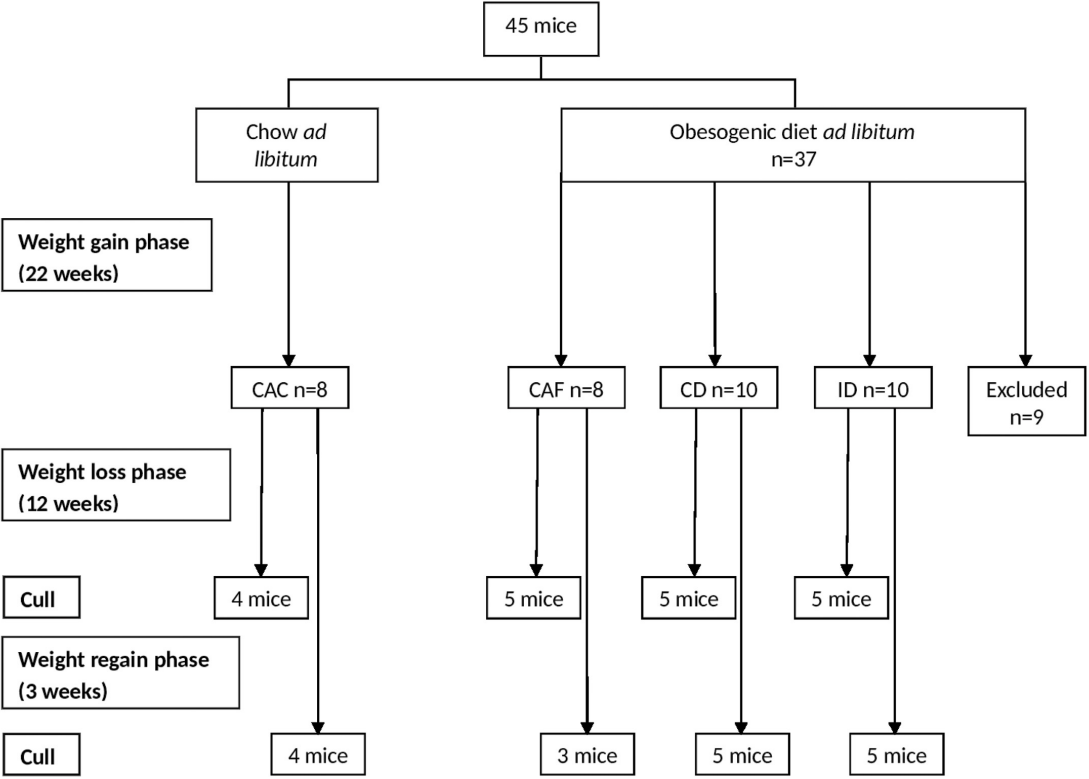
To change that Radhika V. Seimon and colleagues from the Sydney Medical School conducted a preliminary, but highly interesting rodent trial. In said study, male C57/Bl6 mice that had been rendered obese by an ad libitum diet high in fat and sugar for 22 weeks were then fed one of two energy-restricted normal chow diets for a 12-week weight loss phase.
  • The continuous diet (CD) provided 82% of the energy intake of age-matched ad libitum chow-fed controls. 
  • The intermittent diet (ID) provided cycles of 82% of control intake for 5–6 consecutive days, and ad libitum intake for 1–3 days. 
In conjunction with the group on the control (CAC) and the group on a continuously obesogenic diet (CAF), that's a total of four diets. In that, the control diet (CAC) was necessary, because the data was used to calculate the efficacy of the CD and ID diets as (total weight change) ÷ [(total energy intake of mice on CD or ID)–(total average energy intake of controls)] - or, in other words, weight change divided by calorie deficit.
Figure 1: Study flow chart. CAC, continuous ad libitum chow; CAF, continuous ad libitum high fat;
CD, continuous diet; ID, intermittent diet (Seimon. 2016).
To be able to determine any long(er)-term effects that would effect the rodents weight after the diet, a subset of mice underwent an additional 3-week weight regain phase involving ad libitum re-feeding, as a model for returning to an energy sufficient ad libitum (eat as much and what you want).
Yes, this is just a rodent study, but... it is better than no study and the results are at least partly in line with the previously cited study in obese women (read more) who lost 8kg of pure fat in 42 days by calorie shifing - 2.6x more than the calories in vs. out prediction would suggest.
As you can see in Figure 2, both the ID and CD group lost a significant amount of weight during the weight loss phase. In that, it is quite remarkably, though, that (a) the intermittent diet (ID) phase created a continuous up and down, and that (b) the continuous dieting group lost almost all the weight in the first fifth or fourth of the dieting phase, while the intermittent diet group lost its weight continuously (albeit with mini-rebounds / probably water / during refeeds).
Figure 2: Body weight development (g) over the 22+12+3 week weight gain, loss and regain phase (Seimon. 2016).
Eventually, both groups ended up at virtually identical weights at the end of the weight loss phase. Since the ID group achieved this weight loss with ~11.5% higher energy intakes (due to the refeeds) than the CD group, their calculated weight loss efficacy was a whopping 2.3x higher - or, as the scientists phrase it:
"During the weight loss phase, there was a significant, 2.3-fold greater weight loss efficiency (total weight loss total energy deficit) for mice on the intermittent diet compared to those on the continuous diet. This is because whereas both groups of energy-restricted mice exhibited similar total weight loss (Fig 2), the total energy deficit of mice on the inter mittent diet during the 12-week weight loss phase (304.5±47.7 kJ) was less than half that of mice on the continuous diet (646.9±16.8 kJ). This means that for every kJ of deficit in energy intake relative to the energy intake of age-matched control mice, mice on the intermittent diet lost 2.3 times as much weight as mice on the continuous diet (Seimon. 2016)."
No such significant difference was observed for the weight regain and the body composition, though. While the mice in the CAF group were obviously the fattest and kept gaining weight continously, the the fat mass of the mice in the intermittent and continuous diet groups did not differ significantly after dieting and were in fact similar to that of the lean rodents in the control (CAC) group.
Figure 3: Body composition as determined by dual energy X-ray absorptiometry. (A) Fat mass (g), (B) fat mass (% of body weight) and (C) lean mass (g) at the end of the weight loss and weight regain phases. CAC, continuous ad libitum chow; CAF, continuous ad libitum high fat diet; CD, continuous diet; ID, intermittent diet (Seimon. 2016).
And while, at the end of the weight regain phase, fat masses of mice in the continuous and intermittent diet groups remained statistically indistinguishable from each other, the data in Figure 3 suggests a minimal advantage in terms of the fat to total mass ratio, i.e. the body fat % after the weight regain phase - not enough to confirm supposition (3) that refeeds would help "reduce the weight rebound when you return to an energy sufficient diet", but worth mentioning, anyways.

That's also because the differences in the intermittent and continuous diet groups' glucose and insulin levels may not be significant, but they exist with the ID group suffering a sign. less pronounced reduction in insulin (way below control) during dieting and had 15.7% lower insulin levels after the weight regain phase - all that at stable (=group-equivalent) serum glucose levels.
Don't eat unless this brunette,... ah, I mean her clock tells you to eat. That's intermittent fasting (IF) - well, at least one out of at least three versions of eating by the clock people call "intermittent fasting". Needless to say that this doesn't make it much easier to decide if IF works or not | more
Preliminary evidence in favor of refeeds! There's no question that the evidence from the study at hand must be considered - at best - preliminary. Nevertheless, the significantly higher efficacy of dieting with refeeds clearly indicates that this "trick" could make dieting "easier" by reducing the deficit without compromising the fat loss.

And even more: Although this is speculative, one could argue that the difference in body fat regain (the scientists accessed only the significance of the differences in absolute values, by the way), may have reached statistical significance if (a) the refeeding phase had been longer or (b) the deficit and subsequent metabolic adaptation had bee more pronounced... but you know what, right? Let's wait and see what a follow up human study will be able to tell us about the benefits of refeeds on weight... no, wait! Not on WEIGHT, but rather on FAT loss, obviously | Comment!
References:
  • Seimon, Radhika V., et al. "Intermittent Moderate Energy Restriction Improves Weight Loss Efficiency in Diet-Induced Obese Mice." PloS one 11.1 (2016).

Rabu, 09 Maret 2016

High Protein Medium CHO Promotes Lean Mass Gains and Stable Metabolic Rates Compared to Two Different Macros

This could not be a meal from the study too few carbohydrates... even for the medium CHO group.
As a SuppVersity reader you're not going to be surprised to hear about beneficial effects of increased (dairy) protein intakes on weight loss.

What may be surprising, though, is that the statistics based conclusion of a recent study that determined the effects of 16-week high[er]-dairy-protein, variable-carbohydrate diets and exercise training on body composition in men and women with overweight/obesity says: "Compared to a healthy control diet, energy-restricted high-protein diets containing different proportions of fat and CHO confer no advantage to weight loss or change in body composition in the presence of an appropriate exercise stimulus" (Parr. 2016).
Do you have to worry about muscle loss and metabolic damage, when you're fasting?

Breakfast and Circadian Rhythm

Does Meal Timing Matter?

Habits Determine Effects of Fasting

Fasting Works - It Does, Right!?

Does the Break- Fast-Myth Break?

Breakfast? (Un?) Biased Review
If this is not your first visit to www.suppversity.com, you will probably be here, because you know that I never settle for a 1-2 sentence conclusion from an abstract - and guess what: If you take a look at the actual study outcomes, it turns out that there is a noteworthy difference between the three diet groups, in which the participants, one hundred and eleven participants (age 47 6 6 years, body mass 90.9 +/- 11.7 kg, BMI 33 +/- 4 kg/m², values mean +/- SD) were randomly stratified to one of the following (isocaloric) three diets:
  • High dairy protein, high CHO (HDPHC; 30% protein, 55% CHO, 15% fat; 41 dairy servings/day of sweetened, low-fat products)  
  • High dairy protein, moderate CHO (HDPMC; 30% protein, 40% CHO, 30% fat; 41 dairy servings/day of unsweetened/artificially sweetened, full-fat products)  
  • Low dairy protein, high CHO (CON; 15% protein, 55% CHO, 30% fat: 1-2 dairy servings/day) 
All three dietary interventions were implemented as a free-living energy restricted eating plan where energy intake was based on a mild restriction (2250 kcal/day) from estimated maintenance energy
requirements (Frankenfield. 2005).
Table 1: Sample of a 1-day meal plan for each of the diets (1,600 kcal version) - aBold items correspond to a “Basket” of foods that could be consumed as a post-exercise recovery snack or added to the meal structure. For the first 8 weeks, participants consumed a prescribed meal plan consisting of a meal structure 1one “Basket” per day. From weeks 8 to 16, participants were encouraged to develop their own meal structure (using a points system to achieve a desired energy and macronutrient intake) and add one of 5-7 “Basket” combinations to the day’s intake (Parr. 2016).
Over the course of the study, the subjects got more leeway (no wonder they didn't lost that much fat during the 2nd phase of the study). While week 1-8 required the subjects to consume a prescribed menu that met the desired energy restriction and macronutrient composition, week 9-16 involved a more flexible self-chosen plan (week 9-16) that was based on a points system. The points system was yet only one of the things that was supposed to increase the subjects' adherence. In addition ...
"[...p]articipants met fortnightly with a dietitian and were provided with edu cation resources. Menus for each diet provided for three meals/day and a “Dairy/Snack Basket” (food choices that achieved most of the nutrient manipulation for each diet; Table 1). For the higher protein diets, the Baskets contained foods equivalent to four to five dairy servings (NHMRC. 2011) where two servings were to be consumed as soon as practical post-EXT. In the moderate-protein CON diet, “Baskets” provided CHO-rich choices (e.g., non-dairy) for post-EXT recovery snacks and meal additions" (Parr. 2016).
To optimize fat and minimize muscle loss, all participants had to follow the same combined resistance (REX) plus aerobic exercise (EXT) training:
  • REX - 3 sessions per week (total 48 sessions in 16 weeks) of an individualized training program; a range of exercises were employed to train the same muscle groups (chest, back, legs and core) for 3-4 sets of 8-15 reps at 40-70% of 1RM. Exercise diaries kept by the study trainers were used to ensure the appropriate weight and number of sets was completed.
  • EXT - 4 sessions on days without REX equating to 250 kcal/day energy expenditure; more specifically, the subjects performed exercises such as a 4 km walk, 16 km cycle or 1 km swimming, or equivalent combinations
The effects on body composition were monitored by pre-/inter-/post-DXA scans. The results, which are also the reason why I previously said that the statistics-based conclusion may be misleading are plotted in Figure 1, which shows no sign. difference in fat, but a meaningful difference in lean mass loss (in the CON group), respectively gains (in the protein groups, HDPHPC, HDMPC).
Figure 1: Effects of a 16-week diet and exercise intervention on the percentage change relative to baseline in (left) fat mass, and (right) lean mass (LM) for three different diets (Parr. 2016).
In that, the lean mass advantage of the high protein medium carbohydrate group (HDPMPC) is most meaningful in the first 8 weeks - meaningful enough to be practically relevant, albeit not statistically significant over the complete 16 week study period. Even if ...
  • the body mass loss in the three groups was virtually identical (HDPMC: 27.2 +/- 3.3 kg; HDPHC: 27.0 +/- 3.3 kg; CON: 27.7 +/- 3.6 kg; P = 0.42), and 
  • the loss of body fat in all groups was significant in both absolute and relative-to-baseline changes across, but not significantly different
The lean mass retention or rather increase in the high protein groups may later literally turn the scale, when the high protein, medium carbohydrate group (HDPMPC) don't experience the same weight rebound as the subjects in the CON and maybe even the HDPHPC group, where the resting energy expenditure started to plummet more steeply after 8 weeks of dieting (see Figure 2).
This is no "high protein diet" study as the ones by Jose Antonio the total protein intake in the so-called "high protein" groups averaged ~110-120g and was thus hardly more than 1.3g/kg body weight. In view of the fact that the only really tightly controlled study on the effects of protein intake on weight and fat loss shows optimal results with a similar protein intake (1.6g/kg) at albeit overall much lower total energy intakes, it is also questionable, whether the lack of significant differences in the study at hand has anything to do with the "low" protein intakes in the high protein groups.
Additional non-significant benefits of the HDPMPC diet compared to the CON diet that were reported only as supplementary data, yet not in the full-text, were:
  • Figure 2: Effects of the diet intervention on total energy expenditure er day (Parr. 2016).
    greater reductions in waist circumference and waist:hip ratio over the full study duration (-1.1 cm and -0.02 vs. CON),
  • greater reductions in trunk fat and greater increases in trunk lean mass,
  • greater reductions in leg fat and greater increases in leg lean mass, as well as
  • greater reductions in glucose, insulin, HOMA-IR, and total cholesterol.
Yes, none of these changes was statistically significant, and still... they occurred over only 16 weeks and the way the energy expenditure (Figure 2) develops, the advantage of the HDPMPC  (open squares) over the MDPHDC (black triangles) and the HDPMDC (black circles) diet is going to increase, not decrease over time.
Trying to keep lean? Probiotics may help even if you tend to overeat or are bulking study shows | more.
Bottom line: Yes, from a statistic perspective, there's no difference between the three diet interventions. From a common-sense perspective, however, everything points towards the high-protein, medium carbohydrate diet as the most effective way to eat during combined weight loss and exercise interventions... well, unless you want to lose weight, not fat while building muscle, that is.

Speaking of building muscle, I hope you realize that the subjects did the latter with little protein (high pro only ~1.3g/kg body weight), but high effort (7 w/outs/week). Goes to show you: You can eat yourself lean, but not lean and muscular | Comment on Facebook!
References:
  • Frankenfield, David, et al. "Comparison of predictive equations for resting metabolic rate in healthy nonobese and obese adults: a systematic review." Journal of the American Dietetic Association 105.5 (2005): 775-789.
  • National Health and Medical Research Council (NHMRC). A modelling system to inform the revision of the Australian Guide to Healthy Eating. In: Australian Dietary Guidelines, Dietitans Association of Australia, K. Baghurst, L Cobiac, P Baghurts and A. Magarey, eds. Chapter 3, Table 4. Canberra: Commonwealth of Australia; 2011, pp 1-621.
  • Parr, Evelyn B., et al. "A randomized trial of high‐dairy‐protein, variable‐carbohydrate diets and exercise on body composition in adults with obesity." Obesity (2016).

Minggu, 24 Januari 2016

Elimination Diet Kickstarts Fatloss in "People Who Cannot Lose Weight" - 16% Body Fat Reduction in 6 Months, But...

Many of these foods contain supposed allergens and have thus to be eliminated from your diet... is it any wonder that this triggers weight loss? Hardly...
While I have to admit that I am a bit skeptical about the reliability of the results of a recent study from the Sifa University, Faculty of Health Sciences in Turkey, I cannot ignore that Meltem Yaman Onmus, Elif Cakirca Avcu, and Ali Saklamaz claim that "people who cannot lose weight by low-calorie diet can lose weight and fat with elimination diet according to the results of FI [food intolerance] test. FIED [FI elimination diet] is also significantly effective in triglyceride levels" (Onmus. 2016). I know that sounds as if it was taken from the latest unreferenced blogpost on a dubious website, but let's not judge prematurely and instead take a closer look at the design and results of the study.
Unlike elimination diets, fasting must be considered a scientifically proven weight loss trick

Breakfast and Circadian Rhythm

Does Meal Timing Matter?

Habits Determine Effects of Fasting

Fasting Works for Obese, Too!?

Does the Break- Fast-Myth Break?

Breakfast? (Un?) Biased Review
82 patients (24 male, 58 female) were included in the study. The mean age was 42.04±11.81 (18-65 years). All of them were "unable to lose weight", i.e. patients who said of themselves that they couldn’t lose weight by diet programs and who had a positive reaction to at least one nutrient in food intolerance test and a BMI value ≥ 25kg/m² - in other words: the subjects were the average Internet bullet-in board dwellers searching for the "magic key" to weight loss.

This is obviously an important fact, because it increases the significance of the study for said group of subjects. Whether the results are significant for anyone else, though, is questionable, since patients who had no food reaction in food intolerance test were excluded from the study. The same goes for subjects who had chronic diseases like diabetes mellitus, coronary heart disease, renal diseases, etc., or individuals who use(d) weight loss drugs and who had allergy to any drug or food and who overuse medications or have pure menstrual migraine or headache that associated a disorder.
No health benefits from "eliminating" foods: Interestingly, the food intolerance elimination diet failed to do what its proponents say it's actually doing: Improve the subjects health. With the exception of a statistically significant decrease in triglyceride levels, there was no improvement in health markers (fasting blood glucose, A1C, total cholesterol, HDL-cholesterol, LDL-cholesterol, AST, and ALT) the scientists didn't observe in the control group, too.
As you can see in Figure 1, this particular group of subjects saw significant benefits from following a diet that did not allow the subjects to consume any of the foods to which they showed an IgG response in the previously conducted food intolerance test for 6 months. Otherwise, the diets of the elimination diet (ED) and control diet were personalized diets with "identical" (according to the size, weight, physical activity, dietary habits and socioeconomic status) energy content.
Figure 1: Pre- and post-intervention weight, body fat, lean body mass, and waist / hip ratio (x10); * indicates significant inter-group difference, this means that everything, but the effect on lean mass was sign. more pronounced in the ED group.
Against that background it is unquestionably striking that the subjects in the elimination diet group lost 16% body fat, while the control group didn't lose either significant amounts of fat or weight. Now, the obvious question is: "Which foods were eliminated?" Unfortunately, this question is neither answered in the study at hand, nor in previous studies showing that elimination diets reduce also reflux disease, chronic fatigue syndrome, and headaches (Selvin. 2007; Akmal. 2009).
Unlike Onmus et al., Akmal et al. publish-ed a list of allergens their IgG test could supposedly identify. A list eliminated foods is yet missing from study, too.
Why's it a problem that we don't know which foods were eliminated? Actually, the answer to this question should be obvious. Let's assume you're "allergic" to sugar, alcohol and high omega-6 vegetable oils like soybean oil. Would you be surprised if you lost significant amounts of body fat if you dropped all sugary and pro-inflammatory high omega-6 foods and stopped drinking alcohol? I, for my part, wouldn't and I guess you wouldn't and you certainly shouldn't be surprised either.

Accordingly, the study at hand does unfortunately not provide enough information to decide whether it provides convincing evidence of using IgG-tests to guide you when you're designing diets for yourself or your clients. Hopefully future research will do just that | Comment!
References:
  • Akmal, Mohammed, Saeed Ahmed Khan, and Abdul Qayyum Khan. "The Effect of the ALCAT Test diet therapy for food sensitivity in patient’s with obesity." Middle East Journal of Family Medicine 7.3 (2009).
  • Onmus, Meltem Yaman, Elif Cakirca Avcu, and Ali Saklamaz. "The Effect of Elimination Diet on Weight and Metabolic Parameters of Overweight or Obese Patients Who Have Food Intolerance." Journal of Food and Nutrition Research 4.1 (2016): 1-5.
  • Selvin, E., Paynter, N. P., Earlinger T. P. "Nutrition and allergy." Arch Intern Med, 167.1 (2007): 31-39.