Tampilkan postingan dengan label HIIT. Tampilkan semua postingan

Selasa, 22 Maret 2016

HIIT vs. Steady-State for Fat Loss: Can EPOC Really Explain the Benefits of Intense Interval Training (HIIT, SIE, HIE)?

HIIT has been touted to work its fat burning magic by increasing post-exercise oxygen consumption aka EPOC, a marker of the amount of fat you burn after your workouts. Eventually, however, only the total oxygen consumption and energy expenditure count and this is where the putative mechanism behind the fat loss effects of HIIT lacks scientific backup.
Higher excess postexercise oxygen consumption (EPOC) after high-intensity interval exercise (HIIT / HIE) and sprint interval exercise (SIE) has long been touted to explain the greater fat loss scientists observed in several studies which compared the fat loss effects effects classic "cardio" aka steady-state exercise (SSE) to interval training (HIIT / HIE).

To elucidate whether that's a reasonable and, more importantly, sufficient  (meaning: "Is the increased energy expenditure high enough to explain the fat loss, even if the steady state exercise consumes more energy and fat on total?") explanation for the previously mentioned advantages, researchers from the Healthy Lifestyles Research Center at the Arizona State University conducted a study to compare the EPOC response to the three most common forms of aerobic training: high intensity interval exercise (HIE), sprint interval exercise (SIE), and steady state exercise (SSE).
You can learn more about HIIT at the SuppVersity

Never Train To Burn Calories!

Tabata = 14.2kcal /min ≠ Fat Loss

30s Intervals + 2:1 Work/Rec.

Making HIIT a Hit Part I/II

Making HIIT a Hit Part II/II

Triple Your Energy Exp.
Ten recreationally active males (age 24 ± 4 y) participated in this randomized crossover study. On separate days, subjects completed a resting control trial and three exercise conditions on a cycle ergometer:
  • HIE (four 4-min intervals at 95% HRpeak, separated by three min of active recovery); and 
  • SIE (six 30-s Wingate sprints, separated by four min of active recovery); and 
  • SSE (30 min at 80% of peak heart rate (HRpeak)). 
Oxygen consumption (VO2) was measured continuously during and for 3 h after exercise to estimate the actual amount of excess energy / fat that was consumed in the three treatment conditions.
Figure 1: Oxygen consumption and respiratory exchange ratio (higher numbers = higher carbohydrate to fat oxidation ratio) during the first three hours after exercise (Tucker. 2016).
Unsurprisingly, VO2 was initially higher than resting control for all three treatments. The increased oxygen consumption, which is a marker of fatty acid oxidation, however, didn't last long: After only 1 h, it returned to pre-exercise levels.
There's room for "cardio": Even though it is not popular, these days, it would be wrong to assume that classic steady state training is always the inferior choice. For someone who's killing it in the gym regularly, the additional HIIT training may in fact be too much of a sympathetic stimulus. The "boring" classic "cardio" training, on the other hand, is predominantly parasympathetic, which is why walking on an incline treadmill may eventually be a better complement to your 4-5 resistance training sessions per week than HIIT cycling or sprinting.
It is thus not really surprising that both, the complete 3-h EPOC and the total net EE after exercise were not extremely different and that that 3-h EPOC and total net EE after exercise were higher (p=0.01) for SIE (22.0 ± 9.3 L; 110 ± 47 kcal) compared to SSE (12.8 ± 8.5 L; 64 ± 43 kcal).
Figure 2: The total O2 consumption (and thus fat oxidation) and energy expenditure during the workout and the 3h thereafter shows that steady state exercise burns more fat and energy than any of the two HIIT regimen (Tucker. 2016).
What goes against the idea of increased fat oxidation after workouts due to HIIT (i.e. SIE or HIE), however, is the scientists observation that the "total (exercise + postexercise) net O2 consumed and net EE were greater (p=0.03) for SSE (69.5 ± 18.4 L; 348 ± 92 kcal) than for SIE (54.2 ± 12.0 L; 271 ± 60 kcal)" (Tucker. 2016), while those for for HIE were not significantly different from SSE or SIE, so that Tucker et al. rightly conclude that "EPOC after SIE and HIE is unlikely to account for the greater fat loss per unit EE associated with SIE and HIE training reported in the literature" (Tucker. 2016).
Bottom line: As Tucker et al. rightly point out, simple math shows that the increased energy expenditure and O2 consumption during the steady state trial more than compensates the significant, but small increase in energy expenditure and fat oxidation after the workout.

Figure 3: Minute-by-minute energy expenditure during a sedentary day and a day beginning with a single bout of sprint interval training (SIT). Data are mean values (Sevits. 2016).
It is important to know that this does not negate the results of previous studies that found beneficial effects of HIIT on fat loss. What the study does do, however, is to refute the hypothesis that these benefits were a result of an increase in EPOC and thus overall larger total energy expenditure. This, on the other hand, doesn't mean that any effects after the EPOC window of 3h investigated in the study could be responsible for said benefits. As Tucker et al. highlight, "another previously confirmed benefit of intense exercise is that it can increase the resting energy expenditure (REE) [... 17-24 h after exercise ...] in part due to an increase in sympathetic tone " (Tucker. 2016).

In conjunction with increases in the ease of locomotion (16, 17) and increase nonexercise activity thermogenesis (NEAT) (14), these effects could well explain the benefits of HIIT. Studies to confirm that are yet not just lacking, as Tucker et al. highlight, the whole-room calorimeter study of Sevits et al. (32) even suggests that SIE does not elevate REE at 24 h postexercise (see Figure 3). More studies to get to the bottom of the fat loss benefits of HIIT protocols appear warranted | Comment.
References:
  • Sevits, Kyle J., et al. "Total daily energy expenditure is increased following a single bout of sprint interval training." Physiological reports 1.5 (2013): e00131.
  • Tucker, Wesley J., Siddhartha S. Angadi, and Glenn A. Gaesser. "Excess postexercise oxygen consumption after high-intensity and sprint interval exercise, and continuous steady-state exercise." The Journal of Strength & Conditioning Research (2016).

Selasa, 15 Maret 2016

Fit and Lean in 4 Min / Week: 1kg Fat Loss, +9% VO2Max, +13% Fat Oxidation - Men Lose Trunk, Women Leg Fat

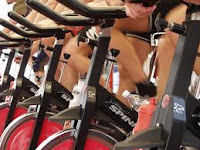
No excuse: You don't need an ex-pensive spinning bike for the workout.
This is not an article for the hardcore trainees among you... unless, obviously you are a trainer or have friends and family who fall into the same "I just wannabe fit and healthy" category as the subjects of a recent study by scientists from the Manchester Metropolitan University and the Cambridge University School of Clinical Medicine (Bagley. 2016),  24 men and 17 women with a mean age of 39 (±2) years, a normal weight (BMI 24.6 +/- 0.6) and average fitness levels.

In this group of "normal people", Bagley et al. aimed to examine the hypothesis that very short duration, very high-intensity sprinting exercise (on cycle ergometers) could not just improve their subjects fitness (as measured by VO2max), but also their ability to burn fat and to actually lose it.
Want to do more HIIT, add bicarbonate as a pH-buffer for immediate performance gains

The Hazards of Acidosis

Build Bigger Legs W/ Bicarbonate

HIIT it Hard W/ NaCHO3

Creatine + BA = Perfect Match

Bicarb Buffers Creatine

Beta Alanine Fails to HIIT Back
After baseline measurements on the DEXA scan (body fat and lean mass) and cycle ergometers (VO2max), the participants were told to do only one thing: A sprint-interval training (SIT) program on a standard cycle ergometer.
"The training consisted of a 2 min warm-up at a self-selected moderate intensity. This was followed by four bouts of 20 s ‘maximal effort’ sprints at a workload that was set at 175% of the workload attained in the VO2max test. Each of these intervals was separated by 2 min of very low intensity cycling (a workload of approximately 20% of that attained at VO2max). Thus, each training session lasted less than 10 min and only 80 s was completed at an inten sity that would be expected to improve physical fitness" (Bagley. 2016). 
The first training session for each participant, who were told to maintain their their usual dietary and exercise habits throughout the intervention, was fully supervised in the research laboratory. To ensure that the subjects would indeed do their three weekly workouts 80s-workouts, the participants were then provided with clear instructions on the use of the cycle ergometers and the training regimen.
But you said "fit in 4 minutes", now the subjects train for almost 10 minutes? Yes and no. They train for 20 minutes, but the actual "exercise", which is something I define as being significantly exerted is 80s per workout. With three workouts per week, that's 3x80s = 240s = 4 minutes! So, I don't want to hear complaints ;-)
The training work load was increased by 5% every 2 weeks. Gym staff were fully informed of the research and training protocols, they logged the training session and were available to offer advice to research participants if needed during training sessions. Participants maintained a training-log to record workloads during training sessions.
Figure 1: Maximal oxygen uptake and rates of fat oxidation measured during exercise in men and women before and after 12 weeks of SIT; all changes were stat. sign. p < 0.05 (Bagley. 2016).
As you can see in Figure 1, the effects these short, highly time-efficient, and absolutely manageable (everyone can workout at max intensity for 4x20s) had on the subjects' fitness were not just statistically significant, they were also practically relevant and, at least for VO2max, differed significantly for men and women.
But how did they lose weight without dieting? The secret is the proven lack of compensation for SIT sessions, which have been show to be as low as <50kcal/week - compared with endurance exercise where compensation is 10x higher, i.e. 500 kcal/week (Burgomaster. 2008). Still, the direct energy expenditure during the short SIT sessions cannot fully explain the fat loss. Therefore, Bageley et al. speculate that "[o]ther contributing factors might include an increase in post exercise energy expenditure [that's unlikely, learn why] or overall shift towards greater fatty acid oxidation during habitual activities throughout the day" (Bagley. 2016).
Overall, the increase in VO2max averages out at 9% - the reasons for the sex-differences is not clear. After all, the scientists point out that men have been shown to have higher gains in VO2max following conventional endurance exercise. The mixed results of previous studies into the effects of sprint interval training, however, are mixed and thus not necessarily contrary to the evidence from the study at hand. While Scalzo et al. (2014), for example, found that young women had similar gains in VO2max as young men, the results Allemeier et al. (1994) et al. presented in the Journal of Applied Physiology suggest that men don't see any increase in VO2max. What could be the reason? Well, this is what the scientists say:
Isn't HIIT for everyone? Study suggests: Effective- and usefulness of high intensity interval training depend on age and fitness level | learn more
"A higher relative amount of lean mass in men compared to women, coupled with a higher relative body fat mass in women compared to men, may go some way in explaining the differences between men and women in maximal oxygen consumption. However, the supply of oxygen to the working skeletal muscles is thought to be a limiting factor in VO2max, so the higher VO2max response in women might point to higher adaptations of oxygen supply than those in men following SIT, but more focused studies examining cardiac output, blood volume, haematocrit and blood flow distribution are needed to clarify this finding.

Conversely, after regular endurance training, men had higher gains in VO2max compared with women. It is possible that the training volume (higher in endurance) and training intensity (higher in SIT) lead to disparate adaptations between men and women in the oxygen carrying capacity of blood (eg, total blood volume, haemoglobin or cardiac output) or local vasculature, but physiological mechanisms driving such responses are unclear" (Bagley. 2016).
No sex differences were observed for the measured health markers, namely glucose, insulin, HOMA, triglycerides, total cholesterol or LDL - only for HDL there was a significantly more pronounced increase in the female vs. male subjects. Eventually, the improvement of the total cholesterol to HDL ratio was yet similarly pronounced in both sexes (-16% in the men, -11% in the women).
Figure 2: Body composition before and after 12 weeks of SIT; * after the categories denotes p < 0.05 (Bagley. 2016).
The previously discussed changes were accompanied by a significant loss of total, leg and trunk fat, as well as significant increases in lean mass in both groups - with inter-sex-differences in total body mass, body fat %, leg fat, and lean mass. That's quite a result, if you take into account the total and actual exercise time the subjects had to invest.
Want to lose >6kg in 6 weeks with more effort, here's how you do it!
Bottom line: I am not sure how feasible this protocol would be for an obese person, but in the healthy normal-weight subjects in the study at hand, the 12x4 minutes of working out intensely made quite a change. Ok, you have to work out thrice a week, but 10 minutes on an exercise bike? That's something you could easily do every morning before showering or when you come home from work.

Ah, and before I forget to highlight that - even though the fat loss in the female subjects may have been smaller than in the male subjects, the women lost fat where many of them hate it the most: on their legs - not bad!? Comment!
References:
  • Allemeier, CRAIG A., et al. "Effects of sprint cycle training on human skeletal muscle." Journal of Applied Physiology 77.5 (1994): 2385-2390.
  • Bagley, Liam, et al. "Sex differences in the effects of 12 weeks sprint interval training on body fat mass and the rates of fatty acid oxidation and VO2max during exercise." BMJ Open Sport & Exercise Medicine 2.1 (2016): e000056.
  • Burgomaster, Kirsten A., et al. "Similar metabolic adaptations during exercise after low volume sprint interval and traditional endurance training in humans." The Journal of physiology 586.1 (2008): 151-160.
  • Scalzo, Rebecca L., et al. "Greater muscle protein synthesis and mitochondrial biogenesis in males compared with females during sprint interval training." The FASEB Journal 28.6 (2014): 2705-2714.

Minggu, 14 Februari 2016

Normal-Weight Women Lose >6kg Fat Mass in 6 Weeks With Three 15x60s HIIT Workouts/Week - Without Dieting

I am still waiting for a study using only body weight exercises like squats, push ups, burpees and co as a HIIT regimen for weight or rather fat loss.
While HIIT is gaining ground especially in male muscle heads, women like the twenty-three previously untrained women (28.43 ± 12.53 years), who participated in a recent study from the Department of Sport at the School of Physical Education and Sport of the University of Sao Paulo in Brazil (Panissa. 2016), are gravitating rather towards training in the alleged (but non-existing) "fat burning" zone at an intensity of 70% of their individual HRmax.

I guess, Panissa et al. knew that, because in their latest study they compared the effects of 6 weeks of high-intensity intermittent training (HIIT) to those of moderate intensity continuous exercise (MICT-control group) on body composition (skinfold measures), hunger and food intake.
Read more about exercise-related studies at the SuppVersity

Tri- or Multi-Set Training for Body Recomp.?

Aug '15 Ex.Res. Upd.: Nitrate, Glycogen, and ...

Pre-Exhaustion Exhausts Your Growth Potential

Full ROM ➯ Full Gains - Form Counts!

BFR-Preconditio- ning Useless for Weights?

Study Indicates Cut the Volume Make the Gains!
As previously highlighted, the subjects were twenty-three previously untrained women (28.43 ± 12.53 years) who were randomly assigned to a HIIT (n = 11) or MICT group (n = 12).
  • The HIIT group performed 15 1-min bouts at 90 % of maximum heart rate (HRmax) interspersed by 30-s active recovery (60 % HRmax). 
  • The MICT group performed a continuous exercise at 70 % HRmax equalizing the training load method proposed by Edwards (1993) to a similar value achieved by the HIIT group. 
Training for both groups was performed on regular cycling ergometers three times per week for 6 weeks. More specifically, both groups performed the same warm up and cool down, composed by 3 min at 60 % of maximum heart rate, MICT sessions consisted of moderate intensity aerobic exercise, i.e., after warm up the subjects performed 29 min at 70 % of maximum heart rate. HIIT group performed 22 min of HIIE using a 2:1 effort–pause ratio, where the effort was 1 min at 90 % of maximum heart rate and recovery was a 30s exercise at the same load as warm up (60 % HRmax).Each training session was closely supervised, and load was adjusted according to individual HR prescription. During this period subjects were asked to avoid any supervised exercise and strenuous efforts during their daily routine.
Was the training load standardized? To equalize training load between groups, the scientists used a method proposed by Edwards (1993). He proposed a zone based method for the calculation of training load. According to Edwards model, the time spent in five pre-defined arbitrary zones is multiplied by arbitrary coefficients to quantify training load. You can read up on the method here.
The performance effects were assessed by the means of Astrand cycloergometer that were used to estimate maximal oxygen consumption (VO2max) 1 week before and after the training period.
"Feeding behavior was assessed by two methods: (1) a 3 days daily food recordatory, including 1 weekend day before the protocols at baseline and after the last session. A detailed explanation for filling the food diary was held at the end of the evaluation, to be returned completed during the first week of training. The analysis of food diaries was made from the application to FatSecret [Subar. 2010]; (2) Immediately after each training session, participants answered a Visual Analog Scale (VAS) of Hunger ranging from 1 to 10, where 1 corresponded to no sensation of hunger and the 10 maximum feeling of hunger" (Panissa. 2016).
The subjects body composition was calculated based on detailed measures of skinfold thickness (triceps, subscapular, chest, supra iliac, abdominal, thigh and leg and the circumference of waist, hip, arm, chest, thigh) and legs - a method that is, assuming it is done correctly, as accurate as an expensive DXA-scan (Eston. 2005; Steinberger. 2005).
Figure 1: Relative changes in BMI, fat free mass (FFM), fat mass (FM) and waist circumference over the 6 week study; absolute changes in kg/m², kg and cm are displayed as first number below the bars (Panissa. 2016).
As you can see in Figure 1, both interval and steady state training induced significant pre- to post-decreases for fat mass, fat percentage, waist circumference and sum of seven skinfolds.
This is no "HIIT is better than LISS / MICT study! Theoretically, the study at hand "proves" that HIIT is more effective than LISS, but let's be honest: if you volume-equate HIIT and light / medium intensity training you end up at durations for the LISS / MICT of which no one would be surprised that they don't trigger fat loss. Plus: Facebook Fans know: HIIT decreases MICT / LISS increases appetite when all things are considered (more). Furthermore, the women were untrained and didn't do extra resistance training which would add additional load on the sympathetic nervous system and may thus (if done 3+ times per week) better be combined with LISS or MICT which would provide a parasympathetic stimulus that could ideally complement your resistance training training.
With a 2:1 fat to muscle ratio, the HIIT regimen was yet significantly more successful in improving the subjects' body composition (which obviously depends on the relative, not the total amount of fat) and that despite the fact that the energy intake didn't change significantly in either of the groups.
Figure 2: Daily energy intake in kcal before and during / after the exercise intervention (Panissa. 2016).
Another parameter that showed a measurable, albeit not significant inter-group difference is the effect of the exercise intervention on the subjects' fitness, as it can be predicted based on the subjects VO2max, a value that increased by a whopping 31.12% in the HIIT group, and only 16.70% in the MICT group - a difference that can hardly surprise the average SuppVersity reader.
Isn't HIIT for everyone? Study suggests: Effective- and usefulness of high intensity interval training depend on age and fitness level | learn more
Bottom line: HIIT wins, but not with a statistically significant advantage. As the authors point out, "the main result of the present study was that although the HIIT was able to promote a higher decrease in body fat mass" (Panissa. 2016). Furthermore, the observed benefits of HIIT were not, as previous studies had suggested, due to changes in hunger and energy intake. This important observation leads the authors to conclude that "the hypothesis that changes in hunger (measured by analogical visual scale in all training sessions) and in energy intake (measured by food diaries preand post-training) would contribute to a higher efficiency of HIIT to decrease body fat was not confirmed by our results" (Panissa. 2014).

What the scientists forget to mention in said conclusion, however, is that the lack of statistical significant differences may be a consequence of the "short term" nature of their study, they emphasized in the title "Can short-term high-intensity intermittent training reduce adiposity?" (Panissa. 2016). I bet: In a longer term and/or better powered follow up study, the already visible changes will achieve statistical significance | Comment!
References:
  • Edwards S. "High performance training and racing." In: Edwards S (ed) High performance training and racing. Feet Fleet Press (2013), Sacramento, pp 113–12.
  • Eston, R. G., et al. "Prediction of DXA-determined whole body fat from skinfolds: importance of including skinfolds from the thigh and calf in young, healthy men and women." European journal of clinical nutrition 59.5 (2005): 695-702.
  • Panissa, Valéria Leme Gonçalves, et al. "Can short-term high-intensity intermittent training reduce adiposity?." Sport Sciences for Health (2016): 1-6.
  • Steinberger, J., et al. "Comparison of body fatness measurements by BMI and skinfolds vs dual energy X-ray absorptiometry and their relation to cardiovascular risk factors in adolescents." International journal of obesity 29.11 (2005): 1346-1352.
  • Subar, Amy F., et al. "Assessment of the accuracy of portion size reports using computer-based food photographs aids in the development of an automated self-administered 24-hour recall." Journal of the American Dietetic Association 110.1 (2010): 55-64.

Jumat, 08 Januari 2016

Carbohydrate Timing Boosts Training Effect: Cut Out Carbs After PM Glycogen Depleting HIT Workout ⇨ "Sleep Low" to Make Game-Changing Performance Gains in Only 3 Weeks

You are no triathlete or coach? That doesn't mean that this study isn't of interest for you. The figurative "extra wind" this training strategy can give you is relevant for almost every athlete.
In a recent study, scientists from the French National Institute of Sport investigated the effect of a chronic dietary periodization strategy in a group of twenty-one highly-trained male triathletes. Previous studies, in which "train-low" strategies, during which athletes are deliberately carbohydrate restricted over certain periods of their training cycle, have reported robust a up-regulation of selected markers of training adaptation (increased whole body fat oxidation, increased activities of oxidative enzymes) compared to training with normal glycogen stores and high CHO availability, however, the subjects experienced at best disappointing performance increases.
Learn more about building muscle and strength at www.suppversity.com

Acutely Increased Hormones Don't Grow Muscle?

Alternating Squat & Blood Pressure - Productive?

Pre-Exhaustion Exhausts Your Growth Potential

Exercise not Intensity Variation for Max. Gains

Battle the Rope to Get Ripped & Strong

Study Indicates Cut the Volume Make the Gains!
Scientists have long speculated that the disconnect between the benefits "training low" offers on the level of cellular / mitochondrial adaptation, on the one hand, and the real-world performance increases, on the other hand, could be a consequence of the necessarily reduced high intensity training intensity during the low-carb phases (Yeo. 2008; Hulston. 2010). If we simply assume that this hypothesis is correct, the solution to the problem should be obvious: Train low when carbohydrates are not necessary and use them, whenever they promote maximal performance.

Marquet et al. implemented this principle in a way I tried to illustrated in Figure 1. More specifically, they tried to maximize the subjects' performance during PM high-intensity training (HIT) by providing copious amounts of carbohydrates before the session and restricted the carbohydrate intake to close to zero after this glycogen-depleting workout.To test the efficacy of this protocol, the scientists used a 2x3 week study design in which the first 3 weeks were used to standardize the volunteers training regimen (10-15 h·wk- 1 : 40% running, 35% cycling, 25% swimming), assess subjects' compliance to the study demands and ensure they all attained similar baseline fitness measures before study commencement.
Figure 1: Overview of important aspects of the dietary / supplemental aspects of the study.
During the decisive second 3-week phase, the subjects were instructed to follow identical diets (by prescribing exact menus, the scientists achieved a high degree of standardization) in combination with either the previously described "sleep low" carbohydrate intake strategy or their usual carbohydrate intake patterns. Unlike the diet / supplementation regimen, the training program the subjects followed was identical for all of them - it ...
Figure 2: Sample weekly protocol for training and CHO intake (g/kg) to achieve different CHO avail. around training (Marquet. 2016)
"consisted of six sessions over four consecutive days, including high intensity training (HIT) sessions in the afternoon and low intensity training (LIT) sessions the next morning. [...] LIT sessions consisted in 60 min cycling at 65% MAP (218.8 ± 20.4 W - 95% CI: 227.5 and 210.7), while HIT sessions consisted alternatively in 8 x 5 min cycling at 85% MAP (286 ± 26.7 W- 95% CI: 297.5 and 274.7) or 6x5 min running at their individual 10 km intensity with 1 min recovery between sets (37). [...] One LIT session per day was prescribed for the other days of the week for a total training volume of 10-15 h" (Marquet. 2016).
All subjects used their own training equipment to record their activity, the duration and intensity of exercise and heart rate. In conjunction with the volunteers' perceived exertion records, as well as VO2max tests, maximal and submaximal performance tests and the results of a simulation of the final leg of a triathlon race, the scientists got a pretty comprehensive set of data.
The effect of "training low" largely depends on the master regulator of mitochondrial adaptation PGC-1a. The latter is activated not just by the contraction induced calcium flux and exercise stress, but also by a lack of glycogen and increased levels of the (low) energy sensing protein AMPK.
How does "training low" work? By deliberately restricting the carbohydrate intake during certain phases of your training you will be able to train in a glyocogen-depleted state and thus with clearly suboptimal fuel availability. The lack of readily available glucose that can be derived from the glycogen stores in your muscle, whenever necessary, exerts profound effects on your overall resting fuel metabolism and patterns of fuel utilization during exercise and triggers acute regulatory processes underlying enzyme and gene expression, as well as cell signaling (signaling proteins, gene expression, transcription rate of several genes, enzymes activity) which regulate the adaptive response to exercise. The results are an increased capacity to oxidize fat, a reduced reliance on glucose as a preferred substrate, etc.
Data that tells us that the authors' hypothesis that they could get the benefits of training low while avoiding the negative sides by "sleeping low" was accurate:
  • Figure 3: Make no mistake about it! The total amount of CHO the subjects consumed was identical it was just timed differently. No difference existed for any of the other macronutrients, either (Marquet. 2016).
    There was a significant improvement in delta efficiency during submaximal cycling , i.e. the power output per calorie, a very important measure for endurance athletes, for the "sleep low" compared to the control group (CON: +1.4 ± 9.3 %, SL: +11 ± 15 %, P<0.05).
  • A similarly pronounced, albeit due to inter-individual differences, which loom large in studies with relatively few participants, only borderline significant (P = 0.06) beneficial effect was observed during the supra-maximal cycling to exhaustion trial at 150% of peak aerobic power, where the control group saw improve-ments of only 1.63 ± 12.4 %, while the "sleep low" group improved by 12.5 ± 19.0 %.
  • The "sleep low" protocol also triggered significantly higher (P < 0.05) improvements in 10k running performance, where the meager -0.10 ± 2.03 % increase in the control group was topped by a -2.9 ± 2.15 % performance increase in the "sleep low" group.
In the "sleep low" group, even the effects on the body composition were significantly more pronounced compared to the control group. To be precise, the subjects who "slept low" burned a whopping 8.7 ± 7.4 % body fat literally overnight, while the control group lost a likewise measurable, but significantly lower and overall non-significant -2.6 ± 7.4% of their body fat - don't be mislead by the size of the bars in Figure 4; the fat mass is on the right axis which starts at 8kg and ends at 10kg. So there was no significant inter-group difference at baseline. No significant inter-group differences were observed for the changes in lean and total mass, either.
Figure 4: Even if you're not training for performance, the improvements in body composition, or more specifically the significant reduction in body fat without sign. changes in lean or total mass, may be of interest for you | total and lean mass on the left axis, fat mass on the right axis; all values in kilograms; sign. changes in % above bars (Marquet. 2016).
Against that background, it is by no means an exaggeration to say that even in the short-term (and that's what I consider particularly impressive here) the "periodization of dietary CHO availability around selected training sessions" can promote "significant improvements" in several highly relevant performance marker of trained athletes" (Marquet. 2016).
8x Increase in "Mitochondria Building" Protein PGC1-Alpha W/ Medium Inten-sity Exercise in Glycogen Depleted Elite(!) Cyclists | Learn more
Drop the carbs pre-bed! No, that's not because carbohydrates in the evening would make you fat. As a SuppVersity reader you know that this is bogus (learn more). The reason why you should consider dropping carbs in the PM (or rather after intense workouts) is their "anti-adaptive" effect - an effect that occurs in response to their ability to replenish your glycogen-stores and thus shut down the "we need to adapt to use more fat" signal to your mitochondria...

Ok, that's not exactly the most scientific explanation (see red box for more), but it is one that highlights one of the most important and yet commonly overlooked principles of physiological adaptations: they occur in response to a need.

If you always provide more than enough carbohydrates, there's no need to increase your ability to use fat as a fuel. If, on the other hand, you (A) fuel yourself with carbs when your body really needs them (during HIT training) to perform at the crucial i + 1 level that will trigger an adaptive response at high intensities, and (B) cut yourself off of a readily available carbohydrate supply when you don't need them (during sleep and low intensity exercise) you maximize the adaptive response to both HIT and LIT (low intensity training) and boost your overall training results | Comment!
References:
  • Hulston, Carl J., et al. "Training with low muscle glycogen enhances fat metabolism in well-trained cyclists." Medicine and science in sports and exercise 42 (2010): 2046-55.
  • Marquet, et al. "Enhanced Endurance Performance by Periodization of CHO Intake: “Sleep Low” Strategy." Medicine & Science in Sports & Exercise (2015): Publish Ahead of Print.
  • Yeo, Wee Kian, et al. "Skeletal muscle adaptation and performance responses to once a day versus twice every second day endurance training regimens." Journal of Applied Physiology 105.5 (2008): 1462-1470.

Senin, 28 Desember 2015

"HIIT-ing it After Arm Workouts Will Ruin Your Gains", Study Says and Confuses Statistical and Practical Significance

Does this look as if sprinting would impair muscular development of arms or any other muscle? I mean, come on - look at the average sprinter: Many gymrats dream of the arms and overall muscular physique they have; no wonder that the data from the full-text shows a different picture than the abstract would suggest.
I have repeatedly written about combining strength and classic endurance training. With endurance first, endurance last and even endurance in-between the studies yielded often very different results in terms of what would be the optimal way to combine both. With a few exceptions in which resistance training was combined with crazy endurance training sessions, however, I've yet never written about nor seen compelling evidence for the often-heard claim that "cardio ruins your gains".

For HIIT, i.e. high-intensity interval training, a recent study from the Nippon Sport Science University does now claim, though, that my that combining HIIT and weight training may be a very bad idea, ... an idea that may in fact, just as the broscientific nightmare suggests "ruin your gains, bro!" Upon closer scrutiny, however, things appear less unambiguous than the abstract would have it...
You can learn more about the optimal exercise order at the SuppVersity

Before, After or In-Between?

Exercise Order and Leptin Levels

Cardio First for Anabolism?

Large Muscle Groups First?

Combine Cardio & Strength, Right

Cardio or Weights First? What the...
The purpose of the study was to examine whether or not lower limb sprint interval training following arm resistance training influences training response of arm muscle strength and hypertrophy. Or in short: Will doing HIIT sprints immediately after an arm workout ruin the strength and strength gains you've primed before? 
Figure 1: According to the study, you better don't do HIIT sprint training after an intense arm workout if you don't want to ruin the strength and size gains you "primed" with curls and co (photo from Kikuchi. 2015)
The subjects, twenty previously only lightly trained men, were divided into resistance a training group (RT, n=6) and concurrent training group (CT, n=6).
  • The RT program was designed to induce muscular hypertrophy (3 sets x 10 repetitions (reps) at 80% 1 repetition maximum [1RM] of arm curl exercise), and was performed in an 8-week training schedule carried out 3 times per week on nonconsecutive days. 
  • Subjects assigned to the CT group performed identical protocols as strength training (ST) and modified sprint interval training (4 sets of 30-s maximal effort, separated in 4m 30-s rest intervals) on the same day. 
The relevant study outcomes the researchers evaluated were the changes in maximal oxygen consumption (VO2max), muscle cross-sectional area (CSA), and 1RM that were measured before and after the 6-week study.
Figure 1: Relative changes in VO2max (conditioning), muscle size (CSA) and strength (1-RM) over 6 wks (Kikuchi. 2015).
As the data in Figure 1 reveals, significant increases in VO2max from pre- to post-test were observed only in the CT group (p=0.010, ES=1.84), but not in the RT group (p= 0.559, ES= 0.35). The rest of the results in Figure 1, however should be kind of surprising to anyone who has read the researchers conclusion that "our data indicate that concurrent lower limb sprint interval training interfere with arm muscle hypertrophy and strength" (Kikuchi. 2015).

No, you are not mistaken. The average muscle size and strength gain in the combined training group was larger. The reason the scientist still claim that their study would show that HIIT impedes strength adaptation is a statistical one. While the changes in the CT group had p-values p > 0.05 and were thus not statistically significant. The (albeit smaller) mean increase in the RT group was significant. Accordingly, the corresponding "effect size" in the RT group is larger than the one in the CT group and thus HIIT training must be bad, right? Well,... I don't think so.
If you take a closer look at the individual muscle  size and strength development, you should notice that being afraid that sprints would ruin your arm development is unwarranted and the statistical significance and effect sizes of the changes practically irrelevant.
Beware of bling faith in abstracts! If you look at my plot of the individual data the scientists luckily published with their full-text, it is yet obvious that this study does not prove and if we are honest, not even really suggest that there practically relevant negative effects of doing HIIT in this workout. If you just read the conclusion to the abstract, which reads "our data indicate that con-current lower limb sprint interval training interfere with arm muscle hypertrophy and strength" (Kiku-chi. 2015), you may be inclined to make unne-cessary changes to your workout that are neither necessary or productive. After all, the objective result of the study is that in some individuals it is possible that the addition of HIIT to an arm workout may have a minor impact on their gains.

In view of the facts that there's (a) one person with a roughly ~41% increase in sleeve sizes in each group and that (b) the average increase in sleeve size would be 23% in the CT and only 21% in the RT group if the two outlayers who lost muscle (one in each group) were excluded, though, I would suggest you ignore this possibility unless you realize that you're making no gains at all with concurrent training. This doesn't falsify the scientists' conclusion, which is based on scientific standard procedure, i.e. look for statistical significant results, use those to make your conclusion, but I felt I needed to write this article to put the theoretically correct interpretation of results of an unquestionably under-powered study into perspective | Comment!
References:
  • Kikuchi et al. "The effect of high-intensity interval cycling sprints subsequent to arm-carl exercise on muscle strength and hypertrophy in untrained men: A pilot study." Journal of Strength and Conditioning Research Publish (2015): Ahead of Print | DOI: 10.1519/JSC.0000000000001315