Rabu, 09 Maret 2016

High Protein Medium CHO Promotes Lean Mass Gains and Stable Metabolic Rates Compared to Two Different Macros

This could not be a meal from the study too few carbohydrates... even for the medium CHO group.
As a SuppVersity reader you're not going to be surprised to hear about beneficial effects of increased (dairy) protein intakes on weight loss.

What may be surprising, though, is that the statistics based conclusion of a recent study that determined the effects of 16-week high[er]-dairy-protein, variable-carbohydrate diets and exercise training on body composition in men and women with overweight/obesity says: "Compared to a healthy control diet, energy-restricted high-protein diets containing different proportions of fat and CHO confer no advantage to weight loss or change in body composition in the presence of an appropriate exercise stimulus" (Parr. 2016).
Do you have to worry about muscle loss and metabolic damage, when you're fasting?

Breakfast and Circadian Rhythm

Does Meal Timing Matter?

Habits Determine Effects of Fasting

Fasting Works - It Does, Right!?

Does the Break- Fast-Myth Break?

Breakfast? (Un?) Biased Review
If this is not your first visit to www.suppversity.com, you will probably be here, because you know that I never settle for a 1-2 sentence conclusion from an abstract - and guess what: If you take a look at the actual study outcomes, it turns out that there is a noteworthy difference between the three diet groups, in which the participants, one hundred and eleven participants (age 47 6 6 years, body mass 90.9 +/- 11.7 kg, BMI 33 +/- 4 kg/m², values mean +/- SD) were randomly stratified to one of the following (isocaloric) three diets:
  • High dairy protein, high CHO (HDPHC; 30% protein, 55% CHO, 15% fat; 41 dairy servings/day of sweetened, low-fat products)  
  • High dairy protein, moderate CHO (HDPMC; 30% protein, 40% CHO, 30% fat; 41 dairy servings/day of unsweetened/artificially sweetened, full-fat products)  
  • Low dairy protein, high CHO (CON; 15% protein, 55% CHO, 30% fat: 1-2 dairy servings/day) 
All three dietary interventions were implemented as a free-living energy restricted eating plan where energy intake was based on a mild restriction (2250 kcal/day) from estimated maintenance energy
requirements (Frankenfield. 2005).
Table 1: Sample of a 1-day meal plan for each of the diets (1,600 kcal version) - aBold items correspond to a “Basket” of foods that could be consumed as a post-exercise recovery snack or added to the meal structure. For the first 8 weeks, participants consumed a prescribed meal plan consisting of a meal structure 1one “Basket” per day. From weeks 8 to 16, participants were encouraged to develop their own meal structure (using a points system to achieve a desired energy and macronutrient intake) and add one of 5-7 “Basket” combinations to the day’s intake (Parr. 2016).
Over the course of the study, the subjects got more leeway (no wonder they didn't lost that much fat during the 2nd phase of the study). While week 1-8 required the subjects to consume a prescribed menu that met the desired energy restriction and macronutrient composition, week 9-16 involved a more flexible self-chosen plan (week 9-16) that was based on a points system. The points system was yet only one of the things that was supposed to increase the subjects' adherence. In addition ...
"[...p]articipants met fortnightly with a dietitian and were provided with edu cation resources. Menus for each diet provided for three meals/day and a “Dairy/Snack Basket” (food choices that achieved most of the nutrient manipulation for each diet; Table 1). For the higher protein diets, the Baskets contained foods equivalent to four to five dairy servings (NHMRC. 2011) where two servings were to be consumed as soon as practical post-EXT. In the moderate-protein CON diet, “Baskets” provided CHO-rich choices (e.g., non-dairy) for post-EXT recovery snacks and meal additions" (Parr. 2016).
To optimize fat and minimize muscle loss, all participants had to follow the same combined resistance (REX) plus aerobic exercise (EXT) training:
  • REX - 3 sessions per week (total 48 sessions in 16 weeks) of an individualized training program; a range of exercises were employed to train the same muscle groups (chest, back, legs and core) for 3-4 sets of 8-15 reps at 40-70% of 1RM. Exercise diaries kept by the study trainers were used to ensure the appropriate weight and number of sets was completed.
  • EXT - 4 sessions on days without REX equating to 250 kcal/day energy expenditure; more specifically, the subjects performed exercises such as a 4 km walk, 16 km cycle or 1 km swimming, or equivalent combinations
The effects on body composition were monitored by pre-/inter-/post-DXA scans. The results, which are also the reason why I previously said that the statistics-based conclusion may be misleading are plotted in Figure 1, which shows no sign. difference in fat, but a meaningful difference in lean mass loss (in the CON group), respectively gains (in the protein groups, HDPHPC, HDMPC).
Figure 1: Effects of a 16-week diet and exercise intervention on the percentage change relative to baseline in (left) fat mass, and (right) lean mass (LM) for three different diets (Parr. 2016).
In that, the lean mass advantage of the high protein medium carbohydrate group (HDPMPC) is most meaningful in the first 8 weeks - meaningful enough to be practically relevant, albeit not statistically significant over the complete 16 week study period. Even if ...
  • the body mass loss in the three groups was virtually identical (HDPMC: 27.2 +/- 3.3 kg; HDPHC: 27.0 +/- 3.3 kg; CON: 27.7 +/- 3.6 kg; P = 0.42), and 
  • the loss of body fat in all groups was significant in both absolute and relative-to-baseline changes across, but not significantly different
The lean mass retention or rather increase in the high protein groups may later literally turn the scale, when the high protein, medium carbohydrate group (HDPMPC) don't experience the same weight rebound as the subjects in the CON and maybe even the HDPHPC group, where the resting energy expenditure started to plummet more steeply after 8 weeks of dieting (see Figure 2).
This is no "high protein diet" study as the ones by Jose Antonio the total protein intake in the so-called "high protein" groups averaged ~110-120g and was thus hardly more than 1.3g/kg body weight. In view of the fact that the only really tightly controlled study on the effects of protein intake on weight and fat loss shows optimal results with a similar protein intake (1.6g/kg) at albeit overall much lower total energy intakes, it is also questionable, whether the lack of significant differences in the study at hand has anything to do with the "low" protein intakes in the high protein groups.
Additional non-significant benefits of the HDPMPC diet compared to the CON diet that were reported only as supplementary data, yet not in the full-text, were:
  • Figure 2: Effects of the diet intervention on total energy expenditure er day (Parr. 2016).
    greater reductions in waist circumference and waist:hip ratio over the full study duration (-1.1 cm and -0.02 vs. CON),
  • greater reductions in trunk fat and greater increases in trunk lean mass,
  • greater reductions in leg fat and greater increases in leg lean mass, as well as
  • greater reductions in glucose, insulin, HOMA-IR, and total cholesterol.
Yes, none of these changes was statistically significant, and still... they occurred over only 16 weeks and the way the energy expenditure (Figure 2) develops, the advantage of the HDPMPC  (open squares) over the MDPHDC (black triangles) and the HDPMDC (black circles) diet is going to increase, not decrease over time.
Trying to keep lean? Probiotics may help even if you tend to overeat or are bulking study shows | more.
Bottom line: Yes, from a statistic perspective, there's no difference between the three diet interventions. From a common-sense perspective, however, everything points towards the high-protein, medium carbohydrate diet as the most effective way to eat during combined weight loss and exercise interventions... well, unless you want to lose weight, not fat while building muscle, that is.

Speaking of building muscle, I hope you realize that the subjects did the latter with little protein (high pro only ~1.3g/kg body weight), but high effort (7 w/outs/week). Goes to show you: You can eat yourself lean, but not lean and muscular | Comment on Facebook!
References:
  • Frankenfield, David, et al. "Comparison of predictive equations for resting metabolic rate in healthy nonobese and obese adults: a systematic review." Journal of the American Dietetic Association 105.5 (2005): 775-789.
  • National Health and Medical Research Council (NHMRC). A modelling system to inform the revision of the Australian Guide to Healthy Eating. In: Australian Dietary Guidelines, Dietitans Association of Australia, K. Baghurst, L Cobiac, P Baghurts and A. Magarey, eds. Chapter 3, Table 4. Canberra: Commonwealth of Australia; 2011, pp 1-621.
  • Parr, Evelyn B., et al. "A randomized trial of high‐dairy‐protein, variable‐carbohydrate diets and exercise on body composition in adults with obesity." Obesity (2016).

Senin, 07 Maret 2016

Path to Fat-Induced Obesity is Sprinkled With Salt - Sodium Boosts Food & Energy Intake & Reduces Fat's Satiety Effect

Think you cannot eat the whole pizza? Add salt - this should "help" with the hardest all-you-can-eat challenges.
I am not telling you something new if I tell you that excess fat consumption has been linked to the development of obesity. I hope that it's also not news to you that the consistent association between high(er) fat intakes and weight gain in epidemiological studies cannot be reproduced in human studies where the diet is just high in fat and doesn't have the perfect "potato chips"-combination of fat and carbohydrate that has not just been proven to increase food intake, but also to have pro-addictive effects on the brain (Hoch. 2015).

The fat to carbohydrate ratio Hoch et al. identified as a crucial determinant of snack food intake and brain reward responses in their 2015 study is yet not the only characteristic feature of potato chips.
Learn more about the effects of your diet on your health at the SuppVersity

Only Whey, Not Soy Works for Wheytloss

Taste Matters - Role of the Taste Receptors
Protein Satiety Shoot-Out: Casein vs. Whey

How Much Carbs Before Fat is Unhealthy?

5 Tips to Improve & Maintain Insulin Sensitivity

The Overfeeding Overview - What Makes You Fat?
Another similarly striking feature chips share with a couple of other highly addictive foods is their salt content. The same salt content of which Bolhuis et al. write in their soon-to-be-published paper in The Journal of Nutrition that we don't know yet how it interacts with the appetitive effects of fat. Apropos fat, whether fat will increase or decrease your appetite is actually highly individual question. Some studies even suggest that a high fat content has appetite reducing effects - at least in those individuals with a high fat taste sensitivity.

Unfortunately, the results of pertinent studies are inconclusive; and that even in people with intact fat taste sensitivity. In view of previous research showing similar associations between the salt content of snack foods and their appetizing effects as they were observed for high carbohydrate + high fat foosds, Bolhuis et al. speculated that our fat taste sensitivity may be influenced by the co-ingestion of salt. To test this hypothesis, the researchers recruited forty-eight healthy adults [16 men and 32 women, aged 18–54 y, body mass index (kg/m2): 17.8–34.4]. After an initial assessment of their individual fat taste sensitivity, the subjects participated in a randomized 2 x 2 crossover design trial, in which each participant attended 4 lunchtime sessions after a standardized breakfast.

Figure 1: The high salt meals were generally rated as more pleasant, while fat had no effect on the perceived pleasantness of the meal (Bolhuis. 2016).
The meals seemed to be identical elbow macaroni (56%) with sauce (44%); the sauces, however, were manipulated to be
  • low-fat (0.02% fat, wt:wt)/low-salt (0.06% NaCl, wt:wt),
  • low-fat/high-salt (0.5% NaCl, wt:wt), 
  • high-fat (34% fat, wt:/wt)/low-salt, or 
  • high-fat/high-salt.  
Ad libitum intake (primary outcome) and eating rate, pleasantness, and subjective ratings of hunger and fullness (secondary outcomes) were measured.

The results indicate that salt increased food (= food weight) intakes by 11%, independent of fat concentration (P = 0.022), while increasing the fat intake had no independent effect of fat on food intake (P = 0.6 for the amount of food, not its energy content).
Figure 2: This is what really counts, the effects of modfiying fat and salt content of the meals on total energy intake during the meals; data in kcal per meal (Bolhuis. 2016).
A slightly different picture emerges for the total energy intake, though. Here, the salt intake still mattered (significant with high vs. low salt meals), the main determinant of the total energy intake, however, was the fat content of the meal, with the high-fat meals triggering a whopping +60% (P < 0.001) increase in energy intake in the average subject.

Figure 3: When the diet was high in salt, the mediating effect of fat taste sensitivity on food intake (in g) is lost (Bolhuis. 2016)
Unlike the amount of fat in the meals, the sex of the participants had an effect on the food intake (P = 0.006), with women consuming 15% less by weight of the high-fat meals than the low-fat meals.

More importantly, however, the fat taste sensitivity appeared to decrease signifi-cantly with increasing amounts of salt in the high-fat meals (fat taste x salt interaction on delta intake of high-fat - low-fat meals; P = 0.012), which tended to trigger a satiety effect in the fat sensitive subjects only if they were also low in salt (see Figure 3).
The Overfeeding Overview: High Fat, Carb, Protein, MCTs, Leptin, Testosterone, T3 & Reverse T3 - Get an Overview of the Consequences of Short- & Long-Term Overfeeding - Yes, the existing research shows that high fat intakes (in the presence of carbo-hydrates) are the most fattening.
Bottom line: As the authors of this intriguing study rightly point out, their results "suggest that salt promotes passive overconsumption of energy in adults" (Bolhuis. 2016) and as if that was not bad enough, even those who are sensitive to a higher fat content of food will be fooled into overeating when the high salt content of said foods overrides the fat-mediated satiation.

Ah,... before you rejoice and start eating tons of unsaltet potato chips - there's one thing I should remind you of: even though an excessive increase in dietary fat (from 0.6 to 15.5 g/100g) did not have a main effect on food intake by weight, it led to a 60% higher energy intake, irrespective of the salt content of the meal - an observation that should remind you of the "volume hypothesis" of satiety | Comment!
References:
  • Bolhuis, Dieuwerke P. et al. "Salt Promotes Passive Overconsumption of Dietary Fat in Humans." The Journal of Nutrition (2016): Ahead of print.
  • Hoch, Tobias, et al. "Fat/carbohydrate ratio but not energy density determines snack food intake and activates brain reward areas." Scientific reports 5 (2015).

Sabtu, 05 Maret 2016

Recent Studies Cast Shadow Over High Dose BCAA Intake: Increased Protein Wasting, Lower Brain Serotonin and More

To guzzle BCAAs all day or not - is that still a question or is the answer settled with the publication of two recent studies?
From previous SuppVersity articles about BCAA you will know that I don't buy into the hype supplement producers generate about the muscle-building and/or muscle-protective effects of high dose BCAA- or leucine-only supplementation.

One of the previously mentioned issues with BCAAs are their putative ill effects on neurotransmitter levels in the brain - effects that had only been observed in rodents, though. Now, a recent study in pigs, who are a much better model of human metabolism (even much better than most apes | Miller. 1987), is fueling the concerns about the pro-depression effects of high dose leucine supplementation.
Learn more about amino acid and BCAA supplements at the SuppVersity

Peri-WO BCAA Blunt Fat Loss

Whey + C Kicks BCAA Ass

Alanyl-Glutamine is it any good?

Glutamine Insted of CHO?

GLU as Intra-Workout BV?

BCAAs deplete neurotransmitters
The corresponding study  (Wessels. 2016), which happens to have been sponsored by the BCAA producer Ajinomoto (quite ironic, isn't it?), sought to elucidate the response of high leucine diets on the activity of the BCAA metabolizing enzyme branched-chain keto acid dehydrogenase complex (BCKDH) and subsequent changes in the concentrations of free amino acids and amino acid derivates in several tissues, including the brain.

Figure 1: Brian tryptophan and serotonin levels in response to diets containing normal or two- (white) and four-fold (grey bar) elevated amounts of leucine (Wessels. 2016).
What the scientists found was a significant decrease in brain tryptophan with twice and a significant reduction of both brain tryptohan and serotonin levels with four times the regular amount of leucine in the piglets' diets (that's 1% vs. 2% vs. 4%). Bad news!? Well, 4% leucine in the diet are a very high amount with questionable practical implications. Even though the study confirms the potentially negative effects of the tryptophan blocking effects of leucine and BCAAs in general, the good think is that it assigns a relatively high number to the required dosage to see effects - whether lower doses would suffice to mess with all three BCAAs, as they were used by Choi et al. (2013), remains elusive, though.
In vivo comparison of the central action of isoleucine, valine, and leucine on glucose kinetics during pancreatic insulin clamps (Arrieta-Cruz. 2016).
It's not all bad news: While the potentially depression promoting effects of high dose leucine and the anti-anabolic / pro-catabolic effects of BCAA supplementa-tion in rodents are bad news, another recent study from the Mexican Ministry of Health supports the previously discussed anti-diabetic effects of isoleucine and sug-gests that valine may have similar effects. In view of the fact that the putative mechanism, for the increased glucose infusion rate (GIR | see Figure on the left) is an increased inhibitory effect of insulin on endogenous glucose production (EGP), not an increase in peripheral glucose utilization, it is yet questionable how relevant the results of Arrieta-Cruz' recent study in diet-induced o-bese rats are for athletes / healthy individuals for whom exuberant glycolysis / gluconeogenesis isn't a problem.
While it obviously depends on the severity of your BCAA addiction, whether the Wessels study is bad news for you, it is it is unfortunately too early to rejoice: More potentially bad news for BCAA junkies comes from a recent study by Milan Holecek et al. (2016) whose efforts to prove that diets containing extra BCAAs (valine, leucine, and isoleucine | HVLID), or a high(er) content of leucine (HLD) would have beneficial effects on the protein balance of rats in a two months study produced results neither the scientists nor I would have expected: In high doses BCAAs make your body waste protein!
Figure 2: BCAA content of the standard (SLD), high BCAA (HVLID) and high leucine (HLD) diets (Holecek. 2016).
Needless to say that this result is in diametrical contrast to what the scientists expected. Not only did Holecek et al. fail to demonstrate the expected positive effects of the chronic consumption of a BCAA- / leucine-enriched diet on protein balance in skeletal muscle. The results of their latest study actually "indicate rather negative effects from a leucine-enriched diet" (Holecek. 2015).
But BCAAs are muscle-builders how can leucine & co ruin protein synthesis? A reliable answer to this question has unfortunately yet not been found, but the results of the Holecek study suggest that an overabundance of BCAAs triggers an overexpression of the BCAA degrading enzyme BCKA dehydrogenase and the subsequent conversion of BCAAs to BCAA keto acids and / or eventually alanine or glutamine which are then (ab-)used as energy source by the liver (cf. modified figure from Holeček. 2001)
Instead of reducing the breakdown of protein, Holecek et al. found that a BCAA- or leucine-enriched diet tends to increase not just the breakdown of BCAAs, as well as the production of branch-chain keto acids (BCKA), alanine and glutamine and their utilization in visceral organs, it also impaired the rodent's protein synthetic response to a meal in postabsorptive state - particularly in fast-twitch (white) muscles.
Figure 3: Fractional rate of protein synthesis. Means ± SE, p < 0.05. *compared to the corresponding control (SLD or SLD + S); # compared to the corresponding fed group; † HLD (HLD + S) group vs. HVLID (HVLID + S) group (Holecek. 2016).
In spite of the fact that this increase in protein wastefulness, as I would call it, is bad news and the exact opposite of what the shiny BCAA ads and product write-ups promise, a significant loss in muscle weight was only observed in the soleus and ext. digitorum longus of the rodents in the high BCAA, but not the high leucine group. Accordingly, the study sheds a whole new light on the usefulness of BCAAs as 'muscle builders' or 'muscle protectors' and may, as Holecek et al. rightly point out...
"[...] explain the discrepancy between the protein anabolic effects of BCAA or leucine on muscles that were reported under in vitro conditions and/or shortly after BCAA intake and their reduced or lack of effects following chronic administration" (Holecek. 2016).
With the present study being conducted in healthy rodents without any of the condition that lead to muscle wasting (e.g. disorders like diabetes, or natural processes like aging) and in the absence of the stimulatory effect of exercise on signalling pathways that activate protein synthesis, future studies will have to determine, whether the ill effects on protein synthesis and increases in protein breakdown are (a) even more severe in muscle-wasting disorders, the elderly, and / or during endurance exercise, and how (b) the effects are modified by resistance training.
Figure 4: The previously not discussed ill (BCAA) and beneficial (leucine) effects of different levels of said amino acids on the HDL to LDL ratio of the rodents in the Holecek study should be taken into account, as well.
Bottom line: While the main outcomes of the two studies I discussed in detail in today's SuppVersity article do in fact cast a dark shadow on the health and performance benefits of BCAAs, it's not all bad news. Why's that? Here's why: (A) the Wessels study suggests that the amount of BCAAs that is required to produce practically significant reductions in brain serotonin is very high; (B) the significant reduction in the LDL/HDL ratio Holecek observed in the high leucine group of their study (Figure 4) and the lack of visible effects on actual muscle mass in the same group put the relevance of the increased protein breakdown in response to (at least) high dose leucine into perspective; and (C) there's still the Arrieta-Cruz study which shows that even isoleucine and valine of which the Holecek study draws a rather negative image, can have benefits - at least in the obese | Comment!
References:
  • Arrieta-Cruz, Isabel, Ya Su, and Roger Gutiérrez-Juárez. "Suppression of Endogenous Glucose Production by Isoleucine and Valine and Impact of Diet Composition." Nutrients 8.2 (2016): 79.
  • Choi S, Disilvio B, Fernstrom MH, Fernstrom JD. Oral branched-chain amino acid supplements that reduce brain serotonin during exercise in rats also lower brain catecholamines. Amino Acids. 2013 Aug 1. [Epub ahead of print] 
  • FAO (Food and Agriculture Organization of the United Nations. "Food and nutrition in numbers." Rome, 2014; Food and Agriculture Organization of the United Nations.
  • Holeček, Milan. "The BCAA–BCKA cycle: its relation to alanine and glutamine synthesis and protein balance." Nutrition 17.1 (2001): 70.
  • Holeček, Milan, et al. "Alterations in protein and amino acid metabolism in rats fed a branched-chain amino acid-or leucine-enriched diet during postprandial and postabsorptive states." Nutrition & metabolism 13.1 (2016): 1.
  • Miller, E. R., and D. E. Ullrey. "The pig as a model for human nutrition." Annual review of nutrition 7.1 (1987): 361-382.
  • Wessels, et al. "Branched-Chain Amino Acid Degradation and Modify Serotonin and Ketone Body Concentrations in a Pig Model." PLoS ONE 11.3 (2016).

Kamis, 03 Maret 2016

Non-Stimulant, Non-Effective?! Can Non-Stimulant Dietary Herbal Supplements Boost Your Resting Metabolic Rate?

There are two types of alleged fat burners: Type I are the stimulants with proven beneficial effects on you resting metabolic rate and beneficial "side effects" on energy levels and (reduced) appetite. Type II are non-stimulant "fat burners". Two of those have been tested in a recent study ... learn what the study says.
Amanda J. Salacinski, Steven M. Howell, Danielle L. Hill, & Steven M. Mauk, researchers from the Department of Kinesiology and Physical Education at the Nothern Illinois University didn't miss that weight loss supplements are becoming increasingly popular - even in people with with chronic diseases (usually as a consequence of obesity).

Even in healthy individuals, the list of side effects that have been reported for the various fat burners is long (Salacinski et al. highlight G.I. distress, and liver inflammation, which may accompany weight loss resulting from chronic supplementa-tion, in particular)... and while it is long, very long, in fact, it is hardly science based, because evidence controlled treatment trials in healthy and diseased patients are rare, insufficient or simply lacking. That's bad news. After all, for most currently marketed OTC weight loss agents' kitchen-sink approach to fat loss, there's no evidence that they even work.
If you're looking for a true fat burner, try coffee ;-)

For Caffeine, Timing Matters! 45 Min or More?

Coffee - The Good, Bad & Interesting

Three Cups of Coffee Keep Insulin At Bay

Caffeine's Effect on Testosterone, Estrogen & SHBG

The Coffee³ Ad- vantage: Fat loss, Appetite & Mood

Caffeine Resis- tance - Does It Even Exist?
One example the scientists mention are raspberry ketones which have, as the scientists point out, "been widely promoted as a ‘weight loss miracle’ [even though there's more than just] limited research [...] on humans" (Salacinski. 2016); and still, raspberry ketones are at least an ingredient of which you know that it could be working... to some degree. That is in contrast to what the scientists say is true for the majority of products on the US market, which "have inconclusive labels or contain a ‘metabolic activator blend’ which includes no details on the ingredients for weight loss" (Salacinski. 2016). Furthermore, ...
Figure 1: There's no doubt that there was an effective fat burner on the market. The com-bination of ephedrine and caffeine (data from Greenway et al. 2004) did what pharma-cological bogus like "Alli" will never do: burn fat and protect muscle (e.g. Molnar. 2000)
"[...t]he Dietary Supplement Health and Education Act (1994) allows for the marketing of supplements without prior approval of their efficacy and safety by the Food and Drug Administration (FDA). Therefore, the safety profiles for many of these products are unknown, thus leading to variations in their composition and allows for the inclusion of inferior products (Stickel et al., 2005). Moreover, the majority of the research conducted within this area has primarily focused on the use of caffeine, chromium, and ephedra for weight loss, which contributes to increase user confusion and product uncertainty (Anderson, 1998; Greenway et al., 2004; Urbina et al., 2012)" (Salacinski. 2016).
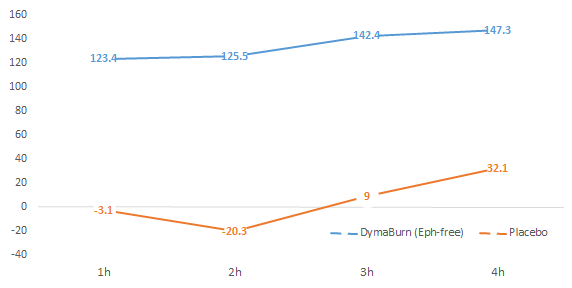
As a more recent study by Urbina et al. (2012) appears to suggest, it doesn't necessarily take ephedrine, though, to elicit significant increases in metabolic rate. The ephedrine-free caffeine + green tea based successor to the ephedrine-based fat burner DymaBurn(TM) may not be as effective, but can still elevate the resting metabolic rate of  6 male and 6 female subjects (N = 12, 22 ± 9.5 yrs, 171 ± 11.2 cm, 76.9 ± 11.2 kg, 22.7 ± 9.5), who consumed either a 2 capsule serving of Dyma-Burn Xtreme (DBX) or placebo (PLC), significantly (see Figure 2):
Figure 2: Effects of the ephedrine-free version of DymaBurn (caffeine, green tea extract, raspberry ketones and L-carnitine) fat burner and placebo on resting metabolic rate at 1h, 2h, 3h and 4h after ingestion; values in kcal / day (Urbina. 2012).
The same goes for the desired "side effects", namely an improved state of mood state that involves increased focus, alertness, and energy (Urbina. 2012)... all three effects are characteristic of stimulants, though, and thus exactly those fat burner ingredients of which Salacinski et al. wanted to determine whether they could be replaced with non-stimulant herbal supplements.
Citrus aurantium is not the valid successor to ephedra marketing campaigns tell you. In fact, Bent et al. found only one reliable placebo-controlled study which yielded the disappointing results you see above (Colker. 1999)
No fat burner "burns fat": Among those agents that won't possibly kill you in no time, none will actively burn fat - not even those that have been proven to trigger significant increases in fat oxidation, like caffeine or green tea. They may help you to shift the weight loss towards body fat, but the <125kcal/day increase in resting metabolic rate from the caffeine + GTE combination I plotted for you in Figure 2 is not going to get you ripped without the help of concomitant dieting efforts.

Fat burners are no magic weight loss pills and still, they can help you lose weight - especially the stim-based ones - because they may reduce appetite, increase energy and thus your ability to adhere to an energy restricted diet with or without concomitant exercise.
Supplements like the kitchen-sink blend CelluCor CLK or the previously mentioned raspberry ketones. Two agents Salacinski et al. administered to 10 healthy female and 16 male participants (mean age 23.7 ± 3.9 years; mean weight 79.2 ± 18.2 kg) in a complex experiment. The latter involved three trials on separate days during the morning hours (0600–1100) during a 2-week interval.
Figure 3: Changes in RMR after the administration of raspberry ketones or CelluCor CLK; p  > 0.05 for both (Salacinski. 2016).
"As recommended by Compher and colleagues (2006), subjects were instructed to refrain from exercising for 24 hours and from consuming food for 12 hours prior to testing. The participant ingested a placebo (an empty digestible capsule) or a dose of one of two supplements; CelluCor CLK or raspberry ketones (R) and CelluCor T7 or the metabolic activator blend (MAB) with water, upon awakening on the morning of each measurement session. The three softgel and two softgel tablets were considered to be a single dose of R and MAB, respectively, as recommended by the manufacturer.

R was composed of 1.7 g of conjugated linoleic acid, 500 mg of l-carnitine tartrate, 100 mg of R, and 100 mg of 7-ketodehydroepiandrosterone. The MAB product consisted of 494 mg of MAB with an ingredient list of white willow bark, cayenne, 3-iodotyrosine, 3, 5-diiodotyrosine, 200 mg of zinc arginate chelate, 150 mg of sea weed extract. 66 mg of niacinamide, 66 mg of griffonia seed extract, and 0.2 mg of selenium" (Salacinski. 2016).
The placebo (control trial) was always ingested on the morning of the first measurement session two hours prior to measurements. The supplement (R or MAB) taken upon awakening prior to the second and third measurement session was randomly determined by a coin toss, again two hours before the data collection. Whichever supplement was not taken prior to the second measurement trial was taken prior to the third measurement trial. At least 24 hours separated the first session (control) with the second session; and at least 48 hours separated the second session from the third session to minimize interference from the previous supplement.

The results of this recent rel. small scale (N=26, no dropouts) study are plotted in Figure 3. Data from two participants were excluded from the statistical analysis because the data could not be adjusted to meet the acceptable criteria recommended by Compher et al. (2007) and Frankenfield et al. (2003). Despite the two exclusions, it should be obvious that the non-significant 0.111% increase due to raspberry ketones and the even lower increase due to CelluCor CLK are meaningless.
Onakpoya, et al. conducted a comprehensive meta-analysis on the weight loss effects of CLA. The analysis shows a non-significant trend for increased weight loss with increasing dosages of conjugated linoleic acid, but overall, their results do "not convincingly show that CLA intake generates any clinically relevant effects on body composition on the long term" (Onakpoya. 2012).
Bottom line: In view of the fact that the study at hand is an acute response study, I have to admit that it is remotely possible that any of the supplements tested could still trigger long-term fat loss, Salacinski et al. rightly point out that their study refutes the often-heard claim that non-thermogenic herbal supplements would be a fit and safe alternative to stimulants. A replacement that would facilitate similar increases in RMR as nowadays mostly caffeine-based thermogenics without side effects.

Irrespective of any methodological gaps, the study at hand suggests shows one thing with a decent certainty: if raspberry ketones alone or RK blends like CelluCor CLK, which contains hydrolysates of Blue Whiting, L-Carnitine Tartrate, CLA (Conjugated Linoleic Acid) and Razberi-K®, a proprietary raspberry extract marketed as "the original ketone ingredient behind this movement", work at all - it is not by increasing your REE | Comment!
References:
  • Anderson, Richard A. "Chromium, glucose intolerance and diabetes." Journal of the American College of Nutrition 17.6 (1998): 548-555.
  • Bent, Stephen, Amy Padula, and John Neuhaus. "Safety and efficacy of citrus aurantium for weight loss." The American journal of cardiology 94.10 (2004): 1359-1361.
  • Colker, Carlon M., et al. "Effects of Citrus aurantium extract, caffeine, and St. John's wort on body fat loss, lipid levels, and mood states in overweight healthy adults." Current Therapeutic Research 60.3 (1999): 145-153.
  • Greenway, Frank L., et al. "Effect of a Dietary Herbal Supplement Containing Caffeine and Ephedra on Weight, Metabolic Rate, and Body Composition*." Obesity research 12.7 (2004): 1152-1157.
  • Molnar, D., et al. "Safety and efficacy of treatment with an ephedrine/caffeine mixture. The first double-blind placebo-controlled pilot study in adolescents." International Journal of Obesity 24.12 (2000): 1573-1578.
  • Onakpoya, Igho J., et al. "The efficacy of long-term conjugated linoleic acid (CLA) supplementation on body composition in overweight and obese individuals: a systematic review and meta-analysis of randomized clinical trials." European journal of nutrition 51.2 (2012): 127-134.
  • Salacinski, Amanda J., et al. "The Acute Effects of Nonstimulant Over-the-Counter Dietary Herbal Supplements on Resting Metabolic Rate." Journal of dietary supplements (2015): 1-10.
  • Stickel, Felix, Eleonora Patsenker, and Detlef Schuppan. "Herbal hepatotoxicity." Journal of hepatology 43.5 (2005): 901-910.
  • Urbina, Stacie, et al. "Effects of ingesting Dyma-Burn Xtreme, a thermogenic dietary supplement on metabolic rate and subjective measures of mood state." JISSN 9.Suppl 1 (2012): P31.

Selasa, 01 Maret 2016

Micro-RNAs (miRNAs) - What are They? Why are They Hot Doping Candidates for the 2020s? How do They Work?

Methylation is the most common form of in vivo miRNA modification (the Scientist)
Micro-RNAs aka miRNAs are small non-coding RNAs that regulate gene expression at the post-transcriptional level... What? I suppose you have heard of epigenetics? Well, miRNA molecules also play a role in epigenetics by triggering "post-transcriptional" changes, i.e. in between the transcription and the translation of a gene.

It is thus not surprising that there is growing evidence that they are involved in a plethora of biological processes - biological processes in the course of which they occur naturally, processes like exercise, for example.
If you want to build muscle forget T-booster and optimize your protein intake 

Protein Timing DOES Matter!

5x More Than the FDA Allows!

Protein requ. of athletes

High EAA protein for fat loss

Fast vs. slow protein

Whey vs. Pea Protein
More recently, scientists have found out more and more about the way miRNAs play a decisive role in the adaptations that occur in the hours and days after you train. They are involved in protein synthesis, mitochondrial biogenesis, muscle repair and all the other processes you want to accelerate or improve n matter if your are doing resistance, endurance or any other exercise.

Figure 1: Specific miRNAs that are currently being pursued as clinical candidates. A subset of the miRNAs of which inhibition has shown therapeutic promise and that are currently actively being pursued as clinical candidates for various disease indications (van Rooij. 2012)
In view of the increasing evidence that miRNAs trigger, block or facilitate many of the various beneficial responses to exercise and promote the regenerative processes that start at the very moment you rack the weights, it can hardly be surprising that that miRNA modulating supplements or drugs are on the top list of "drugs-to-develop" of many researchers.

As of now, however, the focus is on the usual suspects (see Figure 1) like battling Hepatitis C with MiR-122, preventing or reversing cardiac remodeling with MiR-208, soothing inflammation with MiR-155, controlling or even reversing MiR-21, clearing or preventing atherosclerosis with MiR-92a, battling metabolic disease with MiR-33 or MiR-103/107, treating myeloproliferative diseases (non-leukemia proliferation of blood cells) with MiR-45 and triggering cardiac regeneration and repairing injury with MiR-15.
miRNA-related patent distribution in the United States (1661 in total | van Rooij. 2016). Although the miRNA-related patent documents spanned over 60 IPC code categories, almost half of them were not miRNA drugs, but rather patents of technolgies that allow for their successful delivery.
How far are we with developing miRNA-drugs? The development of drugs, which are designed to either act as analogs or block the function of miRNA, has progressed significantly over the past years. The overview of the various patents that had been filed in the US for years ago, already, indicates that (van Rooij. 2016 | Figure on the left). The majorit of filings are yet agents / methods needed to deliver or produce corresponding agents. "Only" 12% of the patents include actual miRNA regulating drugs. Among these you will find straight miRNA molecules, as well as compounds targeting miRNAs, and methods of regulating RNA interference. Likewise on the list are patent filings directed to multiple therapeutic uses of specific miRNA molecules comprised the majority of the general treatment methods group. They account for 11% of the patent documents categorized in the Figure on the lest. Applications and patents disclosing diagnostic uses for miRNAs represented a fourth larger category on the list of the US patent office.
In view of the plethora of potential applications, it should be obvious that it would go way beyond the scope of this article to address all potential drug targets. Accordingly, I am going to focus on the state of the art in exercise related miRNA related research - research that has as of now, not yet produced an FDA-approved performance booster, but could certainly be the future of legal and illegal performance enhancers.
Table 1: MicroRNAs and acute exercise. Resistance Exercise (RE); Endurance Exercise (EE); Human (H); Mouse (M); Rat (R); 1 Repetition maximum (1RM); Maximal oxygen uptake (VO2max); Maximal power output (Pmax); Individual anaerobic threshold (IAT); No Change (NC | Meurer. 2016).
Recently, Meurer et al. have published the above overview (Table 1) of pertinent research in the German medicinal journal "Deutsche Zeitschrift für Sportsmedicine" (Meurer. 2016). The tabular overview reflects what I hinted at previously: Simply supplementing with certain miRNAs will not cut it.
Figure 2: In a 2011 study, scientists observed that differences in the miRNA response to a std. resistance training protocol explained the differential effects on leg muscle mass (Davidsen. 2011).
Why? Well, let's take the example of Davidson's 2011 study in elderly humans (#1 on the list): In said study, the subjects who reacted with the least significant muscle gains to a standardized resistance training had significantly higher miRNA-451 and lower miRNA-378 levels. Any doping agent that would counter this disadvantage would thus have to have the ability boost miRNA-251 and block or lower miRNA-379 - of these, only the former could be done by supplementing straight miRNA-451 in a bioavailable form; to reduce the levels or block the effects of miRNA-378, however, it would take a different agent, one that blocks the effects or production of miRNA-378. If scientists found an agent or a drug combination that could do both, however, it could more than quadruple the muscle gains in a certain part of the population (whether it would also double the gains of young(er) individuals would have to be seen, but it's unlikely it would be completely useless).

Other studies, suggest that circulating miRNA, such as miRNA-486, which appears to be involved in the improvements in insulin sensitivity in response to exercise (Aoi. 2013), have similar important roles in the regulatory mechanisms that are induced by exercise. The mechanisms that are illustrated in Figure 3, are putative and based on the theory that miRNAs, much like cell-based hormones, facilitate a direct cell-to-cell communication and are therefore being secreted into the circulation, where they target neighboring cells to exert a paracrine functions (Chen. 2012).
Figure 3: MicroRNAs are secreted into circulation via multiple carriers, including exosomes, microvesicles and apoptotic bodies or bound to proteins like HDL (high density lipoprotein) and RNA-binding proteins (RBP). This provides protection from RNases and thus degradation when delivered into circulation. C-miRNAs are thought to be released or leaked into circulation in response to stress, injury or tissue damage. Though, the exact release mechanisms (active/passive) as well as uptake of microRNAs into multivesicular bodies (MVB) are still in need for clarification (Meurer. 2016).
As you can see in Figure 3, miRNAs are either incorporated into vesicular structures like exosomes, microvesicles and apoptotic bodies or bound to proteins like HDL and RNA-binding proteins that are carrying around in your blood and give them the ability to exert hormone-like actions. Unfortunately, the "packaging" and transportation of miRNAs is yet another of several not yet fully understood aspects of the ways in which miRNAs work their muscle building, fat burning and disease curing magic - aspects that will have to be elucidated before the age miRNA drugs and doping can begin.
By the means of anti-miRNA treatments scientists are already able to control the myofiber density of artificial human skeletal muscle; by other switches enhance their contractile properties and more (Cheng. 2016). 
We are not yet there, but... Even though respective drugs are still in the development pipeline of laboratories all across the world, the way they will (one day) be able to alleviate the hypertrophy break, help remodel skeletal muscle, improve regeneration or boost mitochondrial biogenesis leaves no doubt that functional miRNA drugs could be the most popular doping agents of the 2020s. In engineered human muscles, for example, Cheng et al. (2016) have already demonstrated that the inhibition of microRNA-133a will enhance the differentiation of muscle cells and thus increase muscle density in the petri-dish. And let's be honest: This result is too promising to believe that corresponding drugs are being developed and maybe even tested in human guinea pigs at the very moment that I write this article | Comment!
References:
  • Aoi, Wataru, et al. "Muscle-enriched microRNA miR-486 decreases in circulation in response to exercise in young men." Front Physiol 4 (2013): 80.
  • Chen, Xi, et al. "Secreted microRNAs: a new form of intercellular communication." Trends in cell biology 22.3 (2012): 125-132.
  • Cheng, Cindy Sue, et al. "Cell density and joint microRNA-133a and microRNA-696 inhibition enhance differentiation and contractile function of engineered human skeletal muscle tissues." Tissue Engineering ja (2016).
  • Davidsen, Peter K., et al. "High responders to resistance exercise training demonstrate differential regulation of skeletal muscle microRNA expression." Journal of Applied Physiology 110.2 (2011): 309-317.
  • Meurer, S., K. Krüger, and F. C. Mooren. "MicroRNAs and Exercise." Dtsch Z Sportmed 67 (2016): 27-34.
  • van Rooij, Eva, Angela L. Purcell, and Arthur A. Levin. "Developing microRNA therapeutics." Circulation research 110.3 (2012): 496-507.